
Deep Excavation Solutions for Sydney's Unique Geology
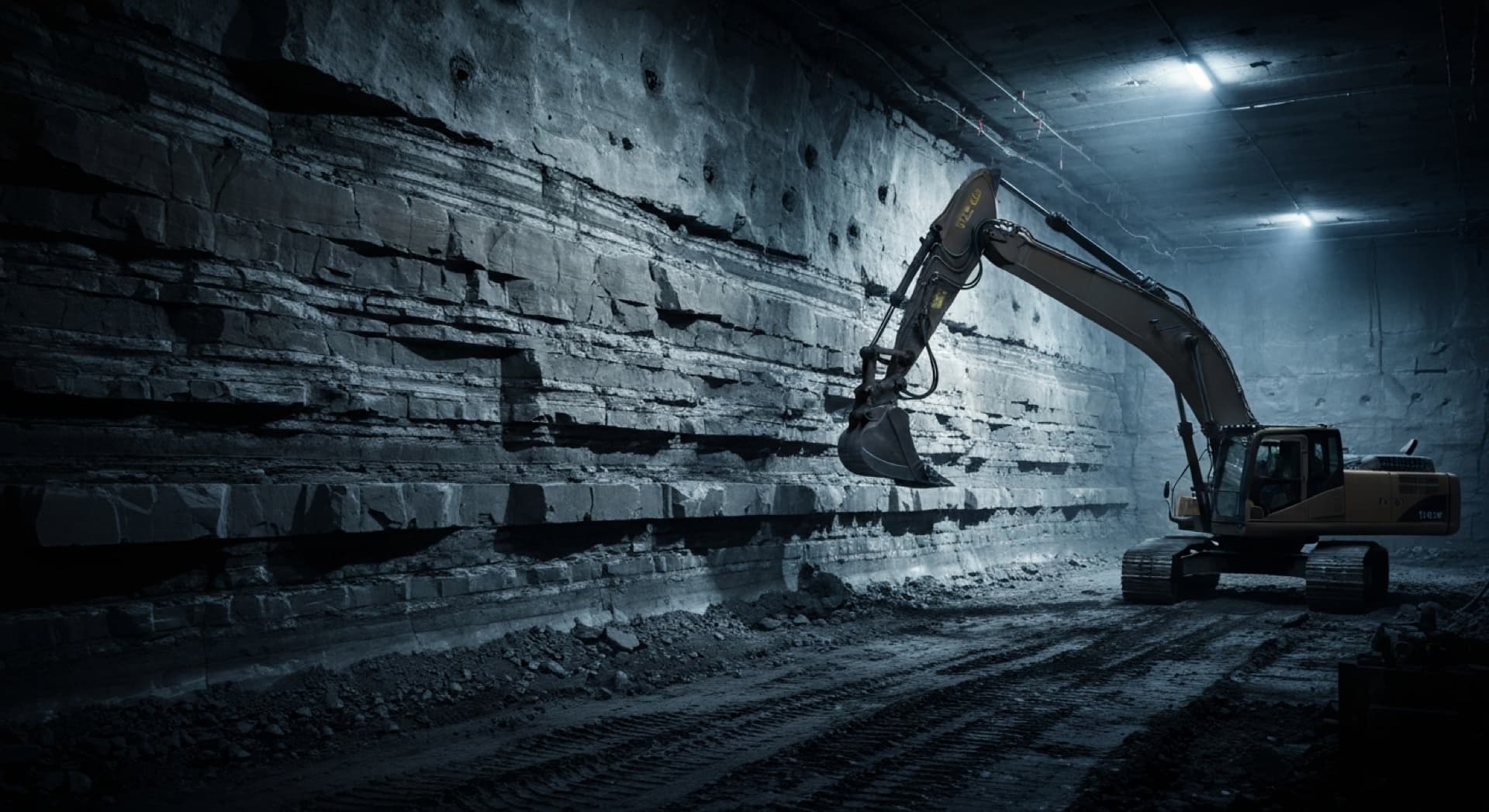
Sydney's Ground Is Anything but Simple
Every project we take on in Sydney starts with the same question: what's in the ground? And the answer is almost always "it depends where you look."
Sydney's geology is a patchwork of Hawkesbury Sandstone, Ashfield Shale, Wianamatta Group sediments, and alluvial deposits, overlain by variable fills from decades of development. On a single site, you can encounter rock at 1 metre depth on one corner and 10 metres of fill on another.
Why This Matters for Deep Excavation
When you're excavating three or four levels for basement carparking, understanding the geological profile is everything. The shoring solution for a site with rock at 2 metres is fundamentally different from a site with 8 metres of soil over weathered shale.
Sydney's Typical Ground Profiles
Eastern suburbs and North Shore - Generally Hawkesbury Sandstone at relatively shallow depth. Good rock quality (Class II-III), high bearing capacity, can often be vertically cut. These sites tend to be more straightforward for excavation, though the sandstone can be expensive to break.
Inner West and Canterbury-Bankstown - More variable. Ashfield Shale is common, often with significant weathering profiles. The transition from soil to rock can be gradual, making it difficult to define where "rock" begins for shoring design purposes.
Western Sydney - Wianamatta Group shales and clays. Often highly reactive clay soils near the surface. Deeper excavations encounter variable quality shale that may or may not stand vertically.
Coastal areas - Sand and alluvial deposits, often with high water tables. Dewatering and groundwater management become critical design considerations.
Our Approach
At ACSES Engineers, we tailor the shoring solution to the specific site conditions. Our typical approach:
- Review the geotechnical investigation in detail - not just the summary, but the borehole logs, test results, and geological interpretation
- Build a finite element model of the excavation, including soil-structure interaction, adjacent structures, and construction staging
- Optimise the shoring system to take advantage of the actual ground conditions
- Design the excavation sequence in consultation with the builder
Cost-Saving Strategies
Use the rock. If competent rock is present within the excavation depth, we can often vertically cut the rock strata without engineered support. This eliminates the need for piles and anchors over that portion of the excavation face, saving significant cost.
Minimise anchor rows. Each row of ground anchors adds cost and programme time. By understanding the ground conditions and running proper FEM analysis, we can often reduce the number of anchor levels required.
Consider cantilevered walls. For shallow excavations in good ground, cantilevered pile walls without anchors can be more economical than anchored systems.
Optimise pile spacing. Closer pile spacing costs more. By understanding the arching capacity of the soil between piles, we can sometimes increase spacing and reduce the total number of piles.
The key to all of these strategies is accurate geotechnical data and robust engineering analysis. You can't optimise what you don't understand.
George Khalil, Principal Engineer

Related Articles
Tell us about your project.
We will respond with a clear understanding of how we can assist.
Partner With Us