
Site Classification and Soil Investigation: The Basics
Site Classification and Soil Investigation
Every building project starts with understanding the ground beneath it. Site classification and soil investigation determine what type of foundation is needed, how excavation should be managed, and what construction challenges to expect.
Australian Standard AS 2870
For residential construction, AS 2870 classifies sites based on their expected ground movement characteristics. Classifications range from Class A (stable, non-reactive) through to Class P (problem sites requiring specific engineering assessment). The classification determines the minimum footing system required.
Soil Investigation Methods
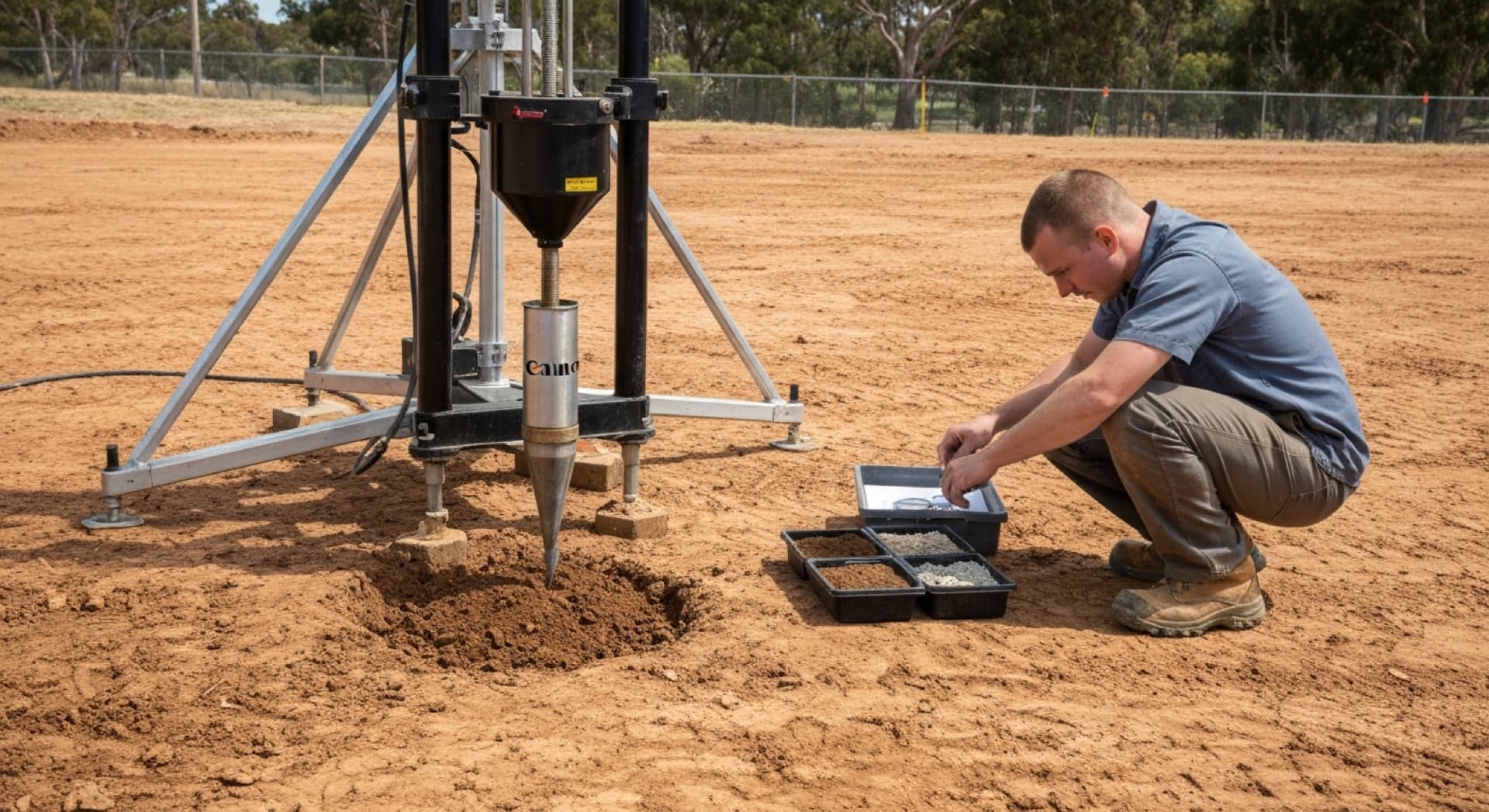
Common investigation methods include borehole drilling with standard penetration testing (SPT), cone penetration testing (CPT), dynamic cone penetrometer testing (DCP), test pits for shallow investigation, and laboratory testing of soil and rock samples.
What Engineers Need
The information that structural engineers need from a soil investigation includes bearing capacity of the foundation materials, settlement characteristics, groundwater conditions, site classification for residential footings, excavation conditions, and any problematic soil conditions such as fill, reactive clays, or contamination.
Getting It Right
At ACSES Engineers, we always recommend thorough geotechnical investigation before design begins. The cost of investigation is typically less than 1% of total project cost but influences some of the most significant design and construction decisions on the project.

Related Articles
Tell us about your project.
We will respond with a clear understanding of how we can assist.
Partner With Us