
Retaining Walls: Types, Design Principles, and Applications
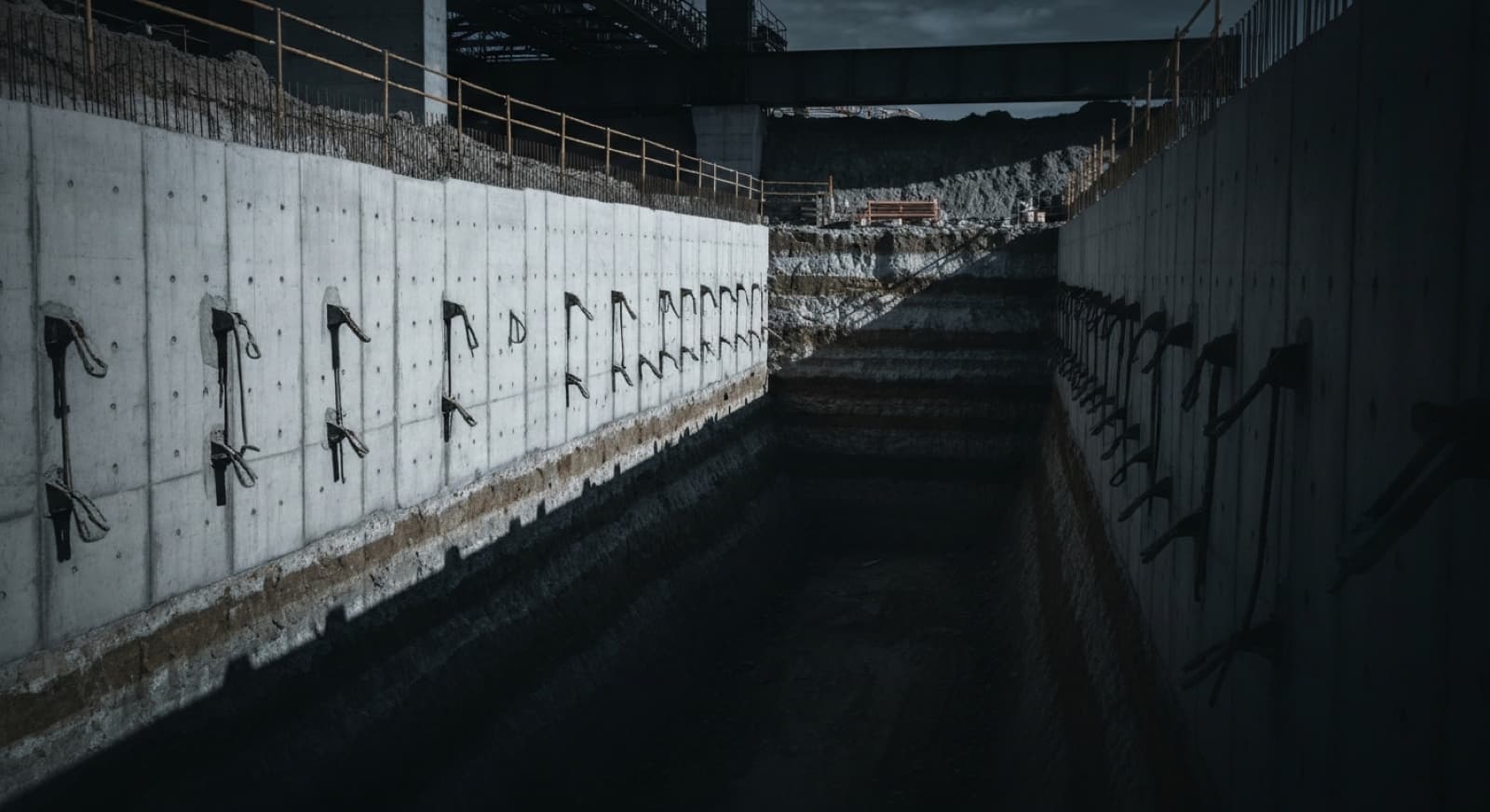
Retaining Walls: Types, Design, and Applications
Retaining walls are structural elements designed to resist the lateral pressure of soil or rock. They are essential components of any project involving changes in ground level - from residential landscaping to multi-level basement construction.
Types of Retaining Walls
Gravity walls rely on their own weight to resist earth pressure. They are typically constructed from mass concrete, stone, or gabion baskets and are suitable for retaining heights up to approximately three metres.
Cantilever walls use a reinforced concrete stem and base slab to resist earth pressure. The weight of soil on the base slab contributes to stability. These are the most common retaining wall type for heights of two to six metres.
Anchored walls use tie-backs or ground anchors to provide additional resistance. They are suitable for tall walls where cantilever action alone is insufficient, and are commonly used in deep excavation shoring.
Mechanically stabilised earth (MSE) walls use layers of geotextile or steel reinforcement within the retained soil to create a stable mass. They are cost-effective for large retaining structures and are commonly used in road and rail infrastructure.
Design Considerations
Retaining wall design must account for active and passive earth pressures, surcharge loads from buildings or traffic, hydrostatic pressure from groundwater, earthquake loads, and foundation bearing capacity and settlement.
Our Experience
At ACSES Engineers, we design retaining walls for projects ranging from residential developments to major infrastructure works. Our multi-disciplinary capability - combining structural and geotechnical expertise - ensures that retaining wall designs are both structurally sound and geotechnically appropriate.

Related Articles
Tell us about your project.
We will respond with a clear understanding of how we can assist.
Partner With Us