
Excavation Near Existing Structures: Best Practices for Sydney Projects
Excavation Near Existing Structures: Best Practices
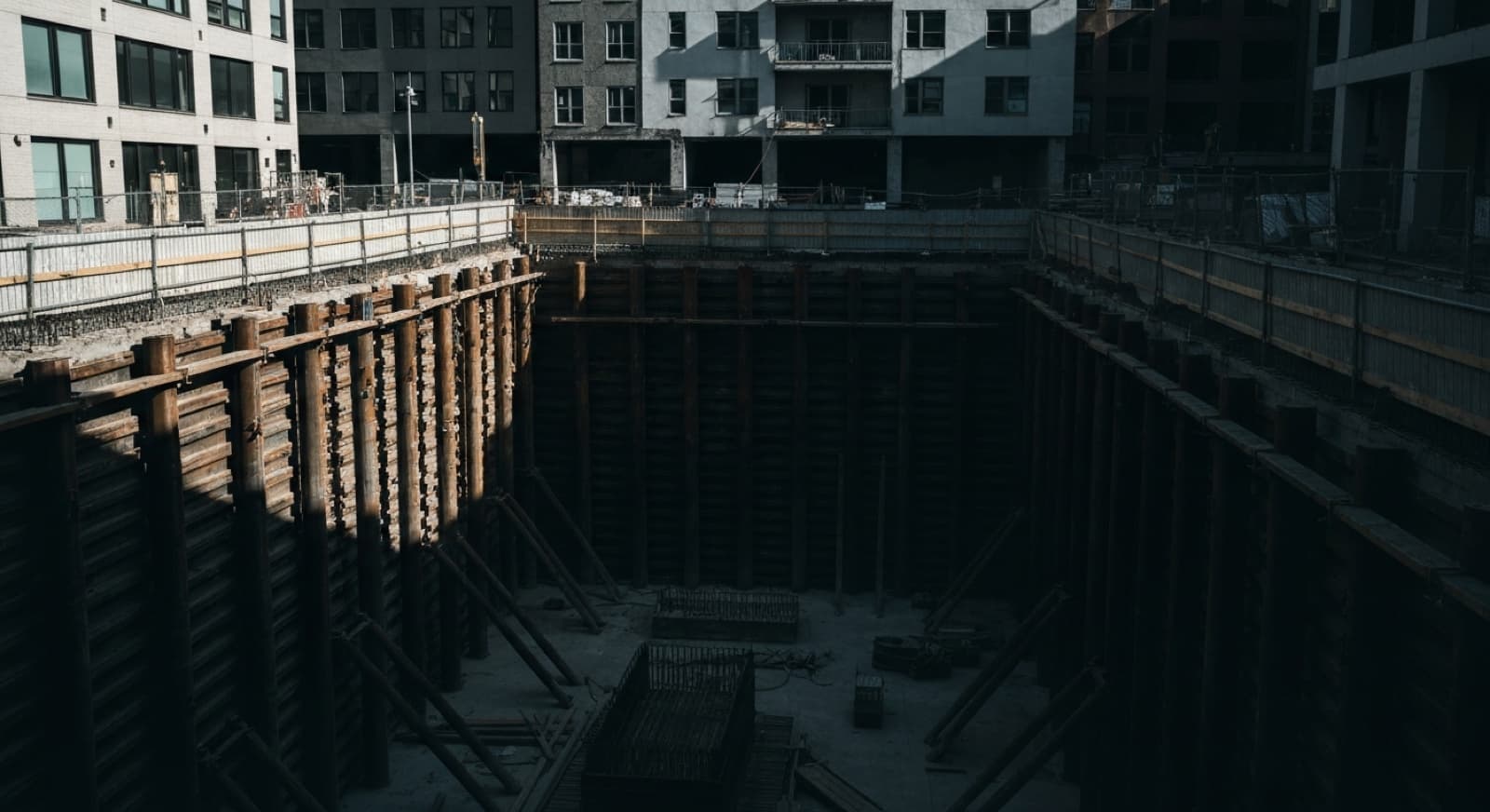
Every development with basements involves excavating near something. It might be the neighbour's house, a commercial building, a road, or underground services. How you manage that excavation determines whether the project runs smoothly or ends up in a dispute.
Understanding the Risk
When you excavate near an existing structure, you remove the ground that was previously supporting it. This changes the stress distribution in the surrounding soil and can cause ground movements. Those movements can manifest as:
- Settlement of neighbouring foundations
- Lateral movement of retaining walls
- Cracking in adjacent buildings
- Damage to underground services
The magnitude of these movements depends on the depth of excavation, the distance to the neighbouring structure, the ground conditions, and the stiffness of the shoring system.
Start with a Geotechnical Investigation
You cannot design safe excavation works without understanding the ground. The geotechnical investigation should characterise the soil and rock conditions across the site and identify any groundwater issues.
Key parameters include:
- Soil type and strength at various depths
- Groundwater levels
- Rock quality and depth
- Soil stiffness parameters for ground movement predictions
Design the Shoring Properly
The shoring system is the primary control measure for ground movements. A well-designed shoring system limits deflections to acceptable levels and provides a safe excavation environment.
At ACSES Engineers, we use FEM to model the shoring system under the full excavation sequence. The model predicts wall deflections, ground surface settlements, and the forces in the shoring elements at each construction stage. This allows us to verify that the design will protect neighbouring structures before any excavation begins.
Prepare Dilapidation Reports
Before excavation starts, commission comprehensive dilapidation reports for all structures within the zone of influence. These reports document the existing condition of neighbouring buildings, roads, footpaths, and services.
A dilapidation report should include:
- Photographic records of existing conditions
- Documentation of any existing cracks, defects, or damage
- Assessment of the building type and foundation system where visible
- A record of any sensitive equipment or features
These reports provide a baseline for comparison if any damage claims arise during or after construction. Without them, you have no objective basis for responding to complaints.
Implement a Monitoring Programme
During excavation, monitor the shoring system and the neighbouring structures to verify that movements remain within the predicted limits. A typical monitoring programme includes:
- Inclinometers in the shoring walls to measure lateral deflections
- Survey prisms on neighbouring buildings to measure settlements and lateral movements
- Crack monitors on any existing cracks in neighbouring structures
- Groundwater monitoring wells to track water levels during excavation
The monitoring results should be reviewed regularly and compared against the design predictions and the trigger levels specified in the shoring design. If movements approach the trigger levels, predetermined response actions should be implemented.
Communicate with Your Neighbours
This is not an engineering recommendation but a practical one. Before construction starts, talk to your neighbours. Explain what you are doing, how long it will take, and what measures you have in place to protect their property.
Most neighbour disputes arise from a lack of communication rather than actual damage. A proactive approach to neighbour relations can prevent issues from escalating.
The Engineering Approach
The best approach to excavation near existing structures is a systematic one:
- Investigate the ground conditions
- Design the shoring to control movements
- Document existing conditions through dilapidation reports
- Monitor during construction to verify predictions
- Communicate with neighbours throughout
This approach requires investment in engineering, monitoring, and communication, but it is far less expensive than the alternative: damage claims, construction delays, and legal disputes.
At ACSES Engineers, we have designed hundreds of shoring systems adjacent to existing structures across Sydney. Our experience allows us to anticipate risks, design appropriate solutions, and support the builder through construction with confidence.

Related Articles
Tell us about your project.
We will respond with a clear understanding of how we can assist.
Partner With Us