
Backpropping and temporary works
Backpropping and temporary works
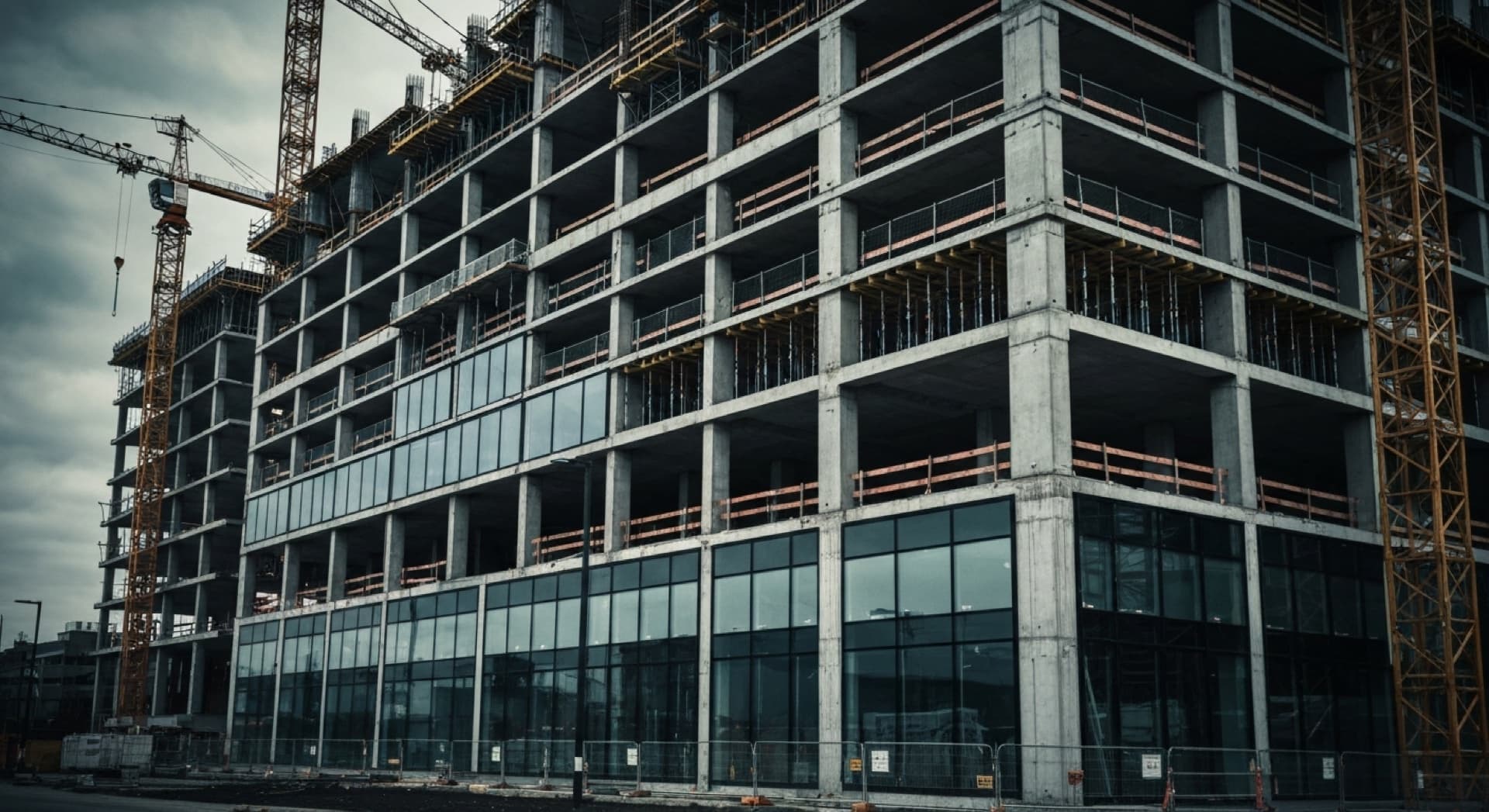
There is a period in the life of every multi-storey concrete building where it carries more load than it ever will again, and it does so before the concrete has reached full strength.
That period is construction, and managing it is temporary works design.
Why the construction case governs
When a slab is poured, the wet concrete, the formwork and the workers are all carried by the level below. That level may be days or weeks old. It has not reached its design strength, and it was never designed to carry another entire slab.
The load has to go somewhere, so it is distributed down through several floors using props. Backpropping is the arrangement that spreads that construction load across enough levels that no single young slab is overloaded.
Get it wrong and you do not usually get a collapse. You get a slab that has been loaded beyond its capacity at an early age, which shows up later as excessive deflection or cracking that was locked in before anyone occupied the building.
It is a design, not a rule of thumb
How many levels of backprops, where they sit, and when they can be struck depends on the slab design, the concrete strength gain, the construction cycle and the load being applied.
A fast cycle on a thin slab needs more levels of backpropping than a slow cycle on a thick one. Using the same arrangement across every project because it worked last time is how a slab gets overloaded on the job where the cycle was accelerated.
Concrete strength gain is the variable that changes most. Cold weather slows it. A mix designed for late strength gain behaves differently to one designed for early stripping. The prop schedule follows the actual strength, confirmed by testing, not the calendar.
Striking too early is the common failure
The pressure on any site is to strip formwork and move it up. Every day the formwork sits is a day it is not being used above.
That pressure is exactly why the striking criteria need to be written down and tied to measured strength rather than to a nominated number of days. On a job where the concrete has not gained as expected, the calendar says strip and the cylinders say wait.
Where this fits with the permanent design
Temporary works is often treated as the contractor's problem and the permanent design as the engineer's. In practice they are one problem, because the construction loading case can govern the reinforcement in the slab.
On projects where the cycle is aggressive, we design for the construction case explicitly rather than assuming the in-service case covers it. That is part of what coordinated delivery means: the design accounts for how the thing will actually be built.
The related cases
Backpropping is the most common temporary works item but not the only one. Formwork design, crane bases, excavation support, propping during demolition and staged load transfer during structural alteration all sit in the same category.
They share a characteristic: the structure is in a condition that exists only briefly, is not the design condition, and is frequently the most heavily loaded state it will ever be in. That is worth designing deliberately rather than assuming.

Related Articles
Tell us about your project.
We will respond with a clear understanding of how we can assist.
Partner With Us