
Underpinning Adjoining Structures: When You Need It and How It Works
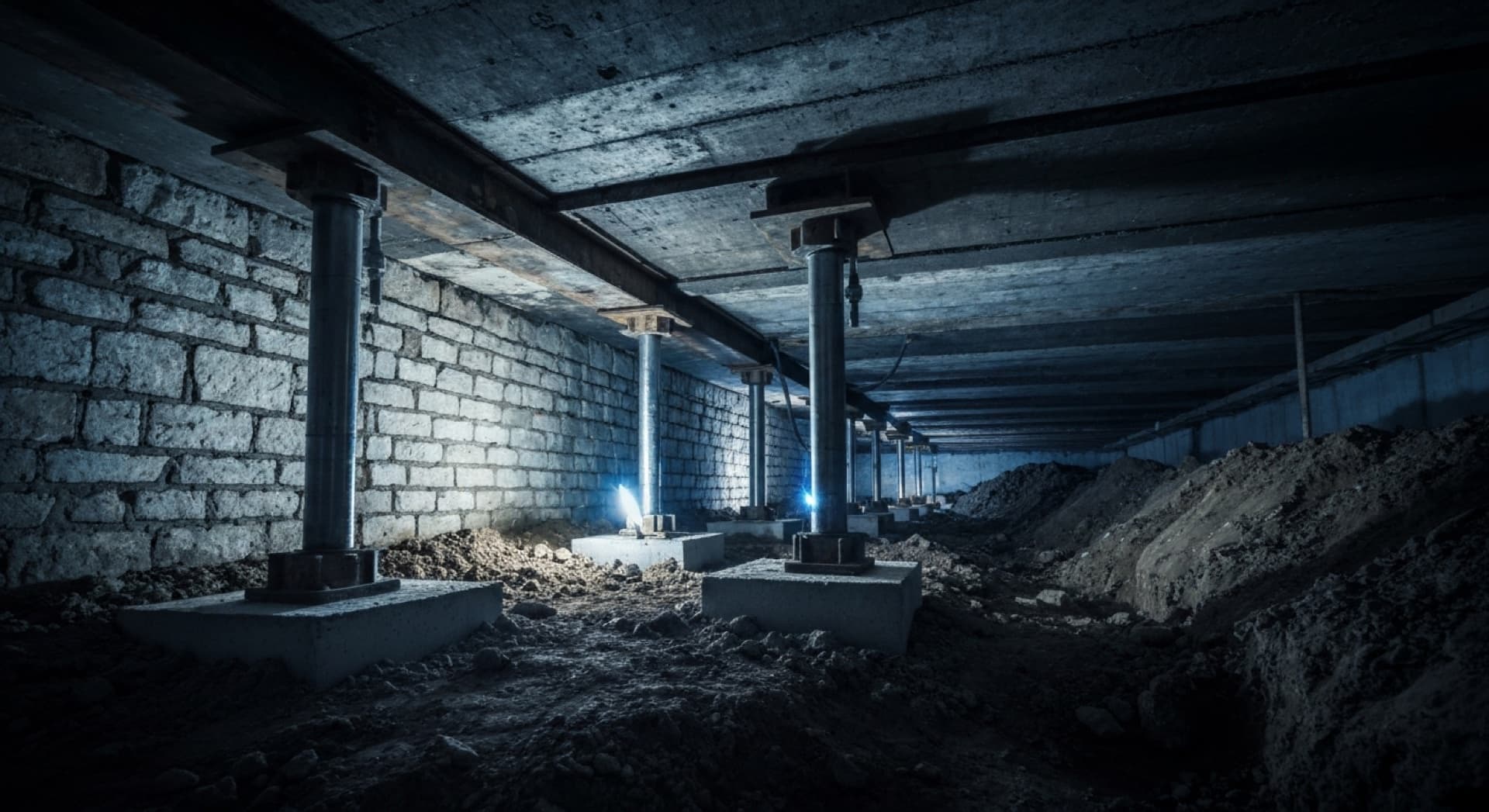
Underpinning Adjoining Structures Explained
Underpinning is one of those engineering topics that developers and builders encounter regularly but rarely understand in detail. When your excavation goes deeper than the foundations of the neighbouring building, underpinning may be required. Here is how it works.
What Is Underpinning?
Underpinning is the process of strengthening or extending the foundation of an existing structure. It is typically required when:
- Your excavation will extend below the founding level of an adjacent building
- The existing foundations are inadequate for their current loads
- Ground conditions have changed due to water table fluctuations or soil degradation
In the context of new development in Sydney, the most common trigger is the first scenario: your new basements go deeper than the neighbour's foundations.
When Is It Required?
The general rule is that if your excavation extends within a zone of influence around the neighbouring foundations, you need to either underpin those foundations or design your shoring to protect them.
The zone of influence is typically defined by a line drawn from the base of the neighbouring foundation at an angle (usually 45 degrees or as determined by geotechnical analysis) to the depth of your excavation. If your excavation falls within this zone, the neighbouring foundations may be affected.
The decision to underpin depends on:
- The depth difference between your excavation and the neighbour's foundations
- The ground conditions
- The sensitivity of the neighbouring structure
- The feasibility of alternative approaches (such as a very stiff shoring wall)
Methods of Underpinning
Traditional Mass Concrete Underpinning
This is the oldest method and involves excavating beneath the existing foundation in short sections and filling the excavation with concrete. The process is done in sequence to ensure the existing foundation is always supported.
It is labour-intensive and slow, but it works well for shallow underpinning requirements where the new founding level is not much deeper than the existing one.
Mini-Pile Underpinning
For deeper underpinning requirements, mini-piles (also called micropiles) can be installed through or beside the existing foundation to transfer loads to a deeper, more competent stratum. A new pile cap or beam is constructed to connect the piles to the existing foundation.
This method is suitable for:
- Deep excavations adjacent to existing buildings
- Situations where access is limited
- Ground conditions that favour piled solutions
Jet Grouting
Jet grouting involves injecting cement grout under high pressure into the ground beneath the existing foundation. This creates columns of improved ground that can carry the foundation loads. It is less common in Sydney but can be effective in certain soil conditions.
The Process
A typical underpinning project follows these steps:
- Geotechnical investigation to determine ground conditions beneath the existing foundation
- Structural assessment of the existing foundation to determine its capacity and sensitivity
- Underpinning design by a structural engineer, including the sequence of works
- Dilapidation report of the existing structure before any works begin
- Construction of the underpinning works in the specified sequence
- Monitoring of the existing structure during and after the works
- Completion report documenting the works as executed
Legal and Practical Considerations
Underpinning the neighbour's property requires access to their land and their consent. This can be a sensitive process that needs to be managed carefully.
In NSW, the Access to Neighbouring Land Act 2000 provides a framework for gaining access when the neighbour is uncooperative, but this should be a last resort. In most cases, a respectful conversation and clear communication about the benefits and protections for the neighbour will secure their cooperation.
Cost Implications
Underpinning adds cost to a project, and developers need to budget for it during the feasibility stage. The cost depends on the method, the length of wall requiring underpinning, and the depth.
The best way to manage underpinning cost is to consider it early in the design process. Your structural engineer can advise on the likely underpinning requirements during the concept stage, allowing you to factor the cost into your feasibility analysis before committing to the project.
The ACSES Approach
We handle underpinning design as an integrated part of our shoring and foundation package. Because we have structural, civil, and geotechnical disciplines in-house, we can assess the need for underpinning, design the solution, and coordinate it with the overall project methodology.
Our experience across hundreds of projects in Sydney means we understand the ground conditions, the regulatory requirements, and the practical realities of underpinning construction. We provide clear documentation and construction support to ensure the works proceed safely and efficiently.

Related Articles

Tell us about your project.
We will respond with a clear understanding of how we can assist.
Partner With Us