
Crane Base Design for High-Rise Construction: What You Need to Know
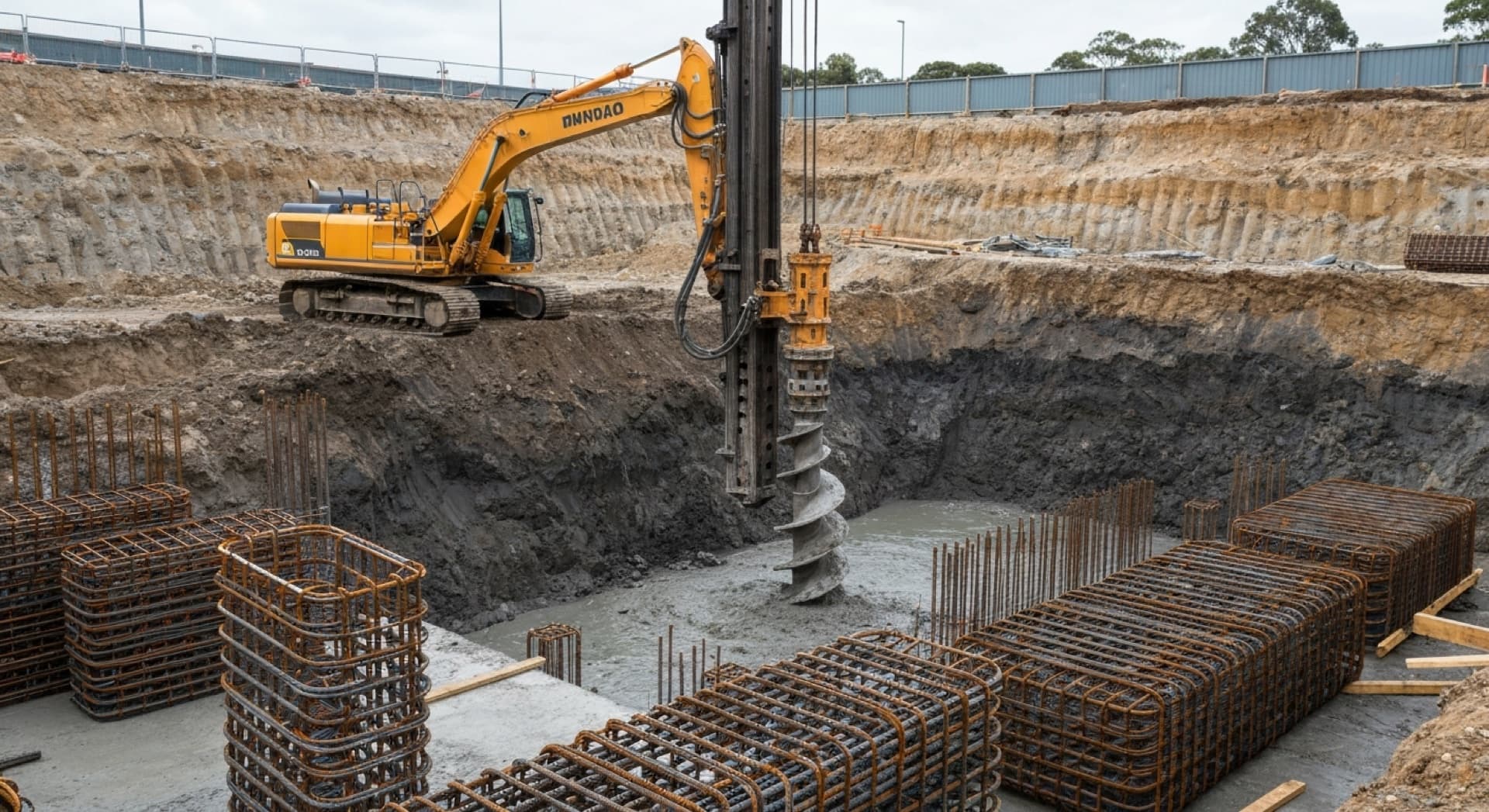
Crane Base Design for High-Rise Construction
Every high-rise construction site needs a crane. And every crane needs a base that can resist the enormous forces generated during lifting operations. The crane base design is one of the most critical temporary works on any project, and getting it wrong can have serious consequences.
The Loads
A tower crane generates three primary load types on its base:
- Vertical compression from the self-weight of the crane, the load being lifted, and the counterweights
- Overturning moment from the eccentricity of the lifted load and from wind acting on the crane structure
- Horizontal force from wind loads and from the dynamic effects of crane operation
The overturning moment is typically the governing load case. When the crane is at maximum radius with a heavy load and wind is blowing, the forces on the base are enormous. The foundation system must resist these forces with an adequate safety margin.
Foundation Options
Gravity Base
A gravity base relies on the weight of the foundation and any structure built on top of it to resist the overturning moment. This is the simplest approach but requires a very large and heavy foundation.
Gravity bases are common for free-standing cranes on sites where the crane is located away from the building structure. The base is typically a large reinforced concrete pad, designed to be heavy enough to prevent overturning under the worst-case load combination.
Tied-Down Base
A tied-down base uses tension piles or ground anchors to resist the overturning forces. This approach allows a smaller foundation footprint because the piles or anchors provide the uplift resistance that would otherwise need to come from the weight of the base.
Tied-down bases are common when the crane is located within the building footprint and the permanent piles or foundations can be used as part of the crane base system.
Hybrid Approach
On constrained sites, we sometimes design hybrid crane bases that combine elements of both approaches. The permanent structure provides some overturning resistance through gravity, while supplementary anchoring or bracing provides the remainder.
We used this approach on the Brougham Street Potts Point project, where the modified hybrid crane base design allowed the crane to be positioned optimally while integrating with the permanent basement structure.
Design Considerations
Ground Conditions
The crane base design must be compatible with the site's geotechnical conditions. A gravity base on soft ground may experience excessive settlement. A tied-down base in poor rock may not develop adequate anchor capacity. The geotechnical investigation is essential for crane base design.
Integration with Permanent Works
Where the crane is located within the building footprint, the crane base elements are often incorporated into the permanent structure. Crane pads become part of the basement slab. Crane piles become part of the foundation system. This integration saves time and cost, but it requires careful coordination between the temporary works design and the permanent structural design.
Removal and Remediation
When the crane is dismantled, the crane base needs to be either removed or incorporated into the permanent structure. If the crane base elements are above the finished floor level, they need to be demolished and the area made good. If they are below the slab, they can be left in place, provided they do not conflict with the permanent works.
Planning for crane removal during the design phase avoids costly and disruptive remediation later.
Safety
Crane base failure is a catastrophic event. A crane that topples can cause fatalities, destroy structures, and halt a project for months. The design of the crane base is not an area where cost-cutting is acceptable.
At ACSES Engineers, we design every crane base with the seriousness it deserves. Our analysis considers the full range of load combinations, including out-of-service wind loads, and our designs include appropriate safety margins beyond the minimum code requirements.
Coordination
The crane base design needs to be coordinated with:
- The crane supplier (who provides the crane loads)
- The geotechnical engineer (who provides the ground conditions)
- The structural engineer (who integrates the base with the permanent works)
- The builder (who constructs the base and operates the crane)
This coordination needs to happen early in the project, ideally before the shoring and foundation design is finalised, so the crane base requirements can be accommodated in the permanent works.
Our Advice
Do not leave the crane base design to the last minute. Engage your structural engineer early, confirm the crane type and location with the builder, and design the base as part of the overall engineering package. It is a critical element that deserves critical attention.

Related Articles

Tell us about your project.
We will respond with a clear understanding of how we can assist.
Partner With Us