
Steel vs Concrete Frame: Making the Right Choice for Your Project
Choosing the Right Structural Frame
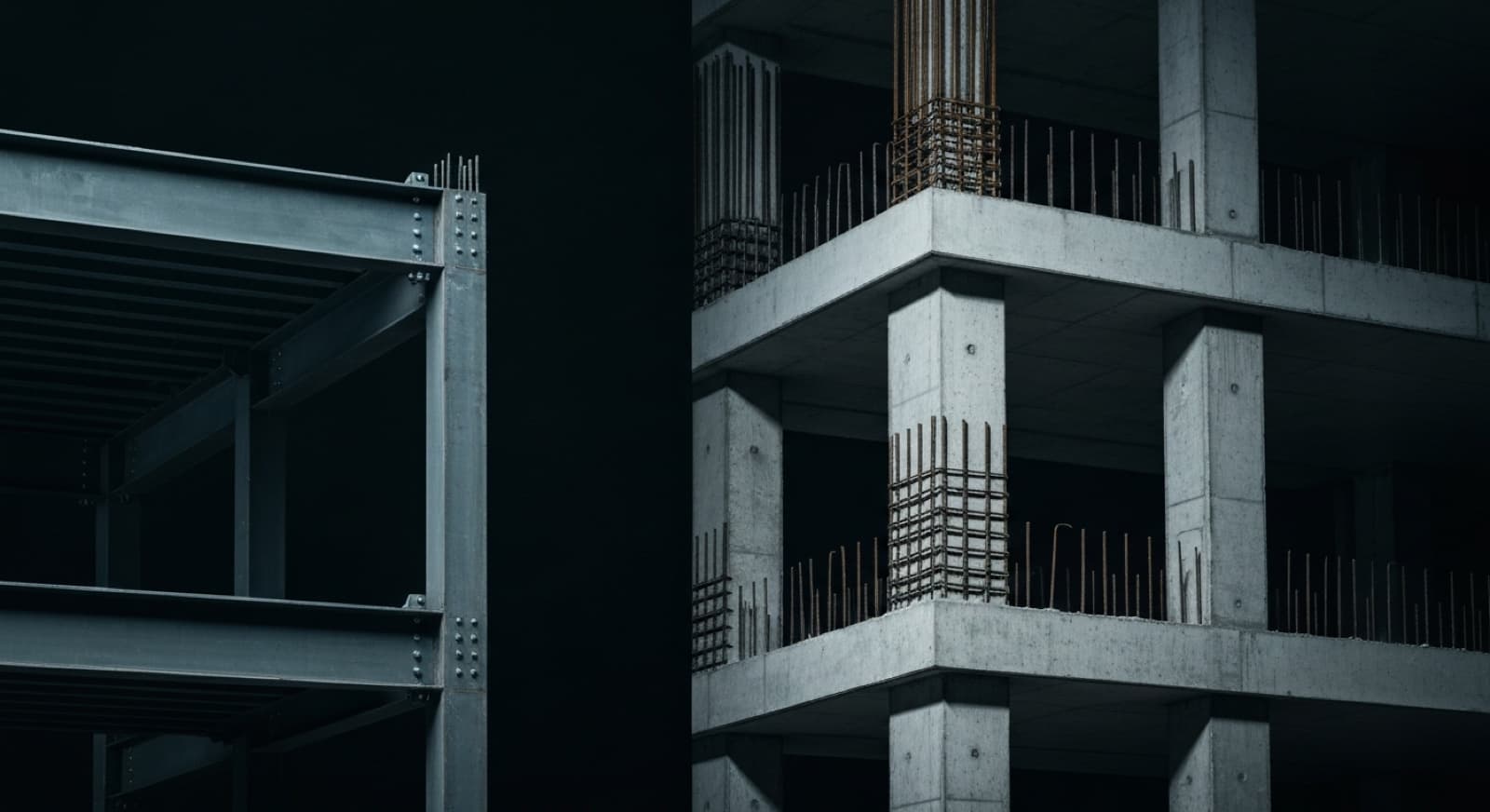
One of the most fundamental decisions in building design is the choice of structural frame material. Steel and concrete each offer distinct advantages, and the right choice depends on project-specific factors including building use, height, span requirements, fire ratings, cost, and construction programme.
Concrete Frame Advantages
Concrete frames dominate multi-storey residential construction in Australia for good reasons. Concrete provides inherent fire resistance, reducing or eliminating the need for applied fire protection. It offers excellent acoustic separation between apartments. And reinforced concrete construction is well understood by Australian builders, with an established supply chain and skilled workforce.
Post-tensioned concrete slabs allow longer spans and thinner slabs compared to conventionally reinforced alternatives. This can reduce floor-to-floor heights, saving on facade, services, and overall building height. In height-restricted zones, thinner slabs may even enable an additional floor within the same building envelope.
Concrete's thermal mass helps regulate internal temperatures, reducing energy consumption for heating and cooling. And concrete structures can be designed with complex geometries using off-form concrete techniques.
Steel Frame Advantages
Steel frames excel where long spans, fast construction, or lightweight solutions are required. Industrial buildings, warehouse facilities, and commercial spaces with large open floor plates often use steel frames because of their ability to span significant distances without intermediate supports.
Steel construction is typically faster than concrete because major elements are fabricated off-site and erected rapidly on-site. This can be a decisive advantage where construction programme is the primary constraint.
Steel also offers advantages for building extensions and alterations. Additional floors can be added to existing buildings using lightweight steel framing where concrete would be too heavy for the existing foundations.
Composite Construction
Many modern buildings use both materials in composite construction. Steel beams with concrete-filled metal deck slabs combine the spanning ability of steel with the fire resistance and acoustic performance of concrete. This hybrid approach can offer the best of both materials.
The Decision Framework
The choice between steel and concrete framing should be based on systematic evaluation of project requirements.
Height: Concrete becomes increasingly advantageous for buildings above 10-15 storeys due to its ability to form efficient lateral load resisting systems.
Span: Steel is generally more efficient for spans above 12-15 metres.
Fire rating: Concrete provides inherent fire resistance. Steel requires applied fire protection unless protected by other means.
Programme: Steel construction is typically faster for erection but requires longer lead times for fabrication.
Cost: In the current Australian market, concrete framing is generally more economical for standard residential and commercial buildings. Steel can be more economical for industrial, warehouse, and long-span applications.
Sustainability: Both materials have environmental impacts. Concrete production generates significant CO2 emissions. Steel production is energy-intensive. However, steel is highly recyclable, while concrete can incorporate recycled aggregates and supplementary cementitious materials.
Our Recommendation
There is no universally correct answer. The optimal frame material depends on a careful analysis of project-specific requirements, constraints, and priorities. At ACSES Engineers, we evaluate both options for every project and recommend the solution that best serves our client's needs.

Related Articles

Tell us about your project.
We will respond with a clear understanding of how we can assist.
Partner With Us