
Section 138 Roads Act Approval For Works On A Public Road
Any work in, on or over a public road in NSW needs the consent of the roads authority under section 138 of the Roads Act 1993. For a development, that covers the driveway crossing, the kerb and gutter, the footpath and any stormwater connection into the street, and the civil drawings for that work are what the authority approves.
On a local road the roads authority is the council. On a classified road, Transport for NSW has a say as well.
What counts as a public road
A public road runs from boundary to boundary. The footpath, the nature strip and the kerb in front of a site are all part of it, so a crossing poured across the footpath is work on a public road, even though no car lane is touched.
Section 138 also covers digging up or disturbing the road surface, removing or interfering with anything on the road, and pumping water onto the road from adjoining land. That last item matters on a basement job, because pumped groundwater or a pump-out system discharging to the kerb needs the authority's agreement.
Works on a typical development
Vehicle crossings. The new crossing, plus removal of any old crossing the development no longer needs, with the kerb rebuilt across it.
Kerb and gutter. New or replaced kerb along the frontage where the consent asks for it.
Footpath. Reconstruction to the council's standard, at the council's levels.
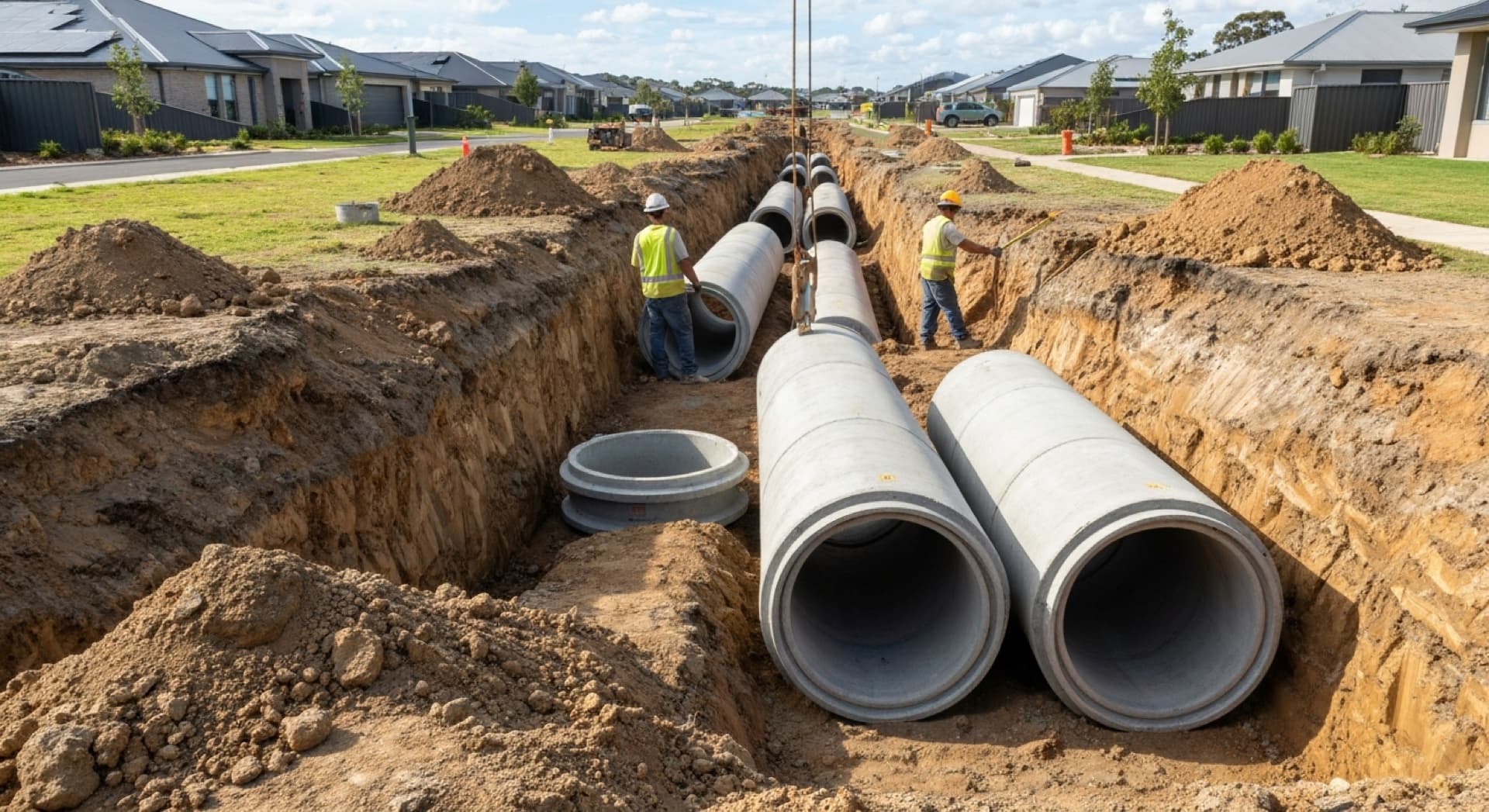
Stormwater connections. A kerb outlet, or a new pit and pipe joining the council system.
Trenches and openings. Any trench across the footpath or the road for a connection.
Temporary works. Hoardings and site structures on the footpath, covered in [hoarding design and council approval in Sydney](/blog/hoarding-design-and-council-approval-sydney), and temporary ground anchors that extend under the road.
Boundary levels from council
Council sets the footpath level at the property boundary, and many councils will issue those levels formally before design starts.
Those levels drive more of the project than people expect. The crossing has to meet them, the driveway has to climb or fall from them within its allowed grades, and the ground floor and basement ramp are set from them. A driveway designed before the boundary levels are confirmed is a driveway that gets redesigned. The ramp side of that problem is set out in [driveway grades and basement ramps](/blog/driveway-grades-and-basement-ramps).
What the civil drawings show
The drawings for a section 138 application show every piece of work inside the road reserve, drawn to the council's engineering specification and standard drawings.
That means a plan of the works, a long section of the driveway running from the gutter through the boundary to the ramp, kerb outlet and pit details, pavement and footpath construction, and the existing services and street trees the work has to respect. The builder adds a traffic and pedestrian management plan for the period the footpath is closed.
Where it sits in the programme
The development consent conditions set when the roads approval has to be in place, and it is often tied to the construction certificate or to the start of any work in the road.
Councils commonly hold a security deposit against damage to the road and footpath, and they inspect the work at set stages, such as the formwork for a crossing before the concrete goes in. Work poured before an inspection is work the council can ask to see removed.
Classified roads
Where a site fronts a classified road, Transport for NSW is involved in the consent, and a new driveway connecting to that road needs its agreement. Larger sites next to state roads and rail corridors carry their own assessment requirements, discussed in [Transport for NSW engineering assessment reports](/blog/transport-nsw-engineering-assessment-reports).
How we approach it
We draw the road reserve works as part of the civil package, to the council's specification, alongside the stormwater and site levels they connect to. The boundary levels are confirmed early, because they set the ground floor, the ramp and the crossing all at once.
The footpath outside a site belongs to the public. Drawings that respect that, and match the council's own standards line for line, get through the approval once.
ACSES provides civil engineering, including road reserve and driveway design, across Sydney. Talk to us about a project.
Building Relationships Beyond Structures

Related Articles
Tell us about your project.
We will respond with a clear understanding of how we can assist.
Partner With Us