
How We Design Basement Structures in Sydney
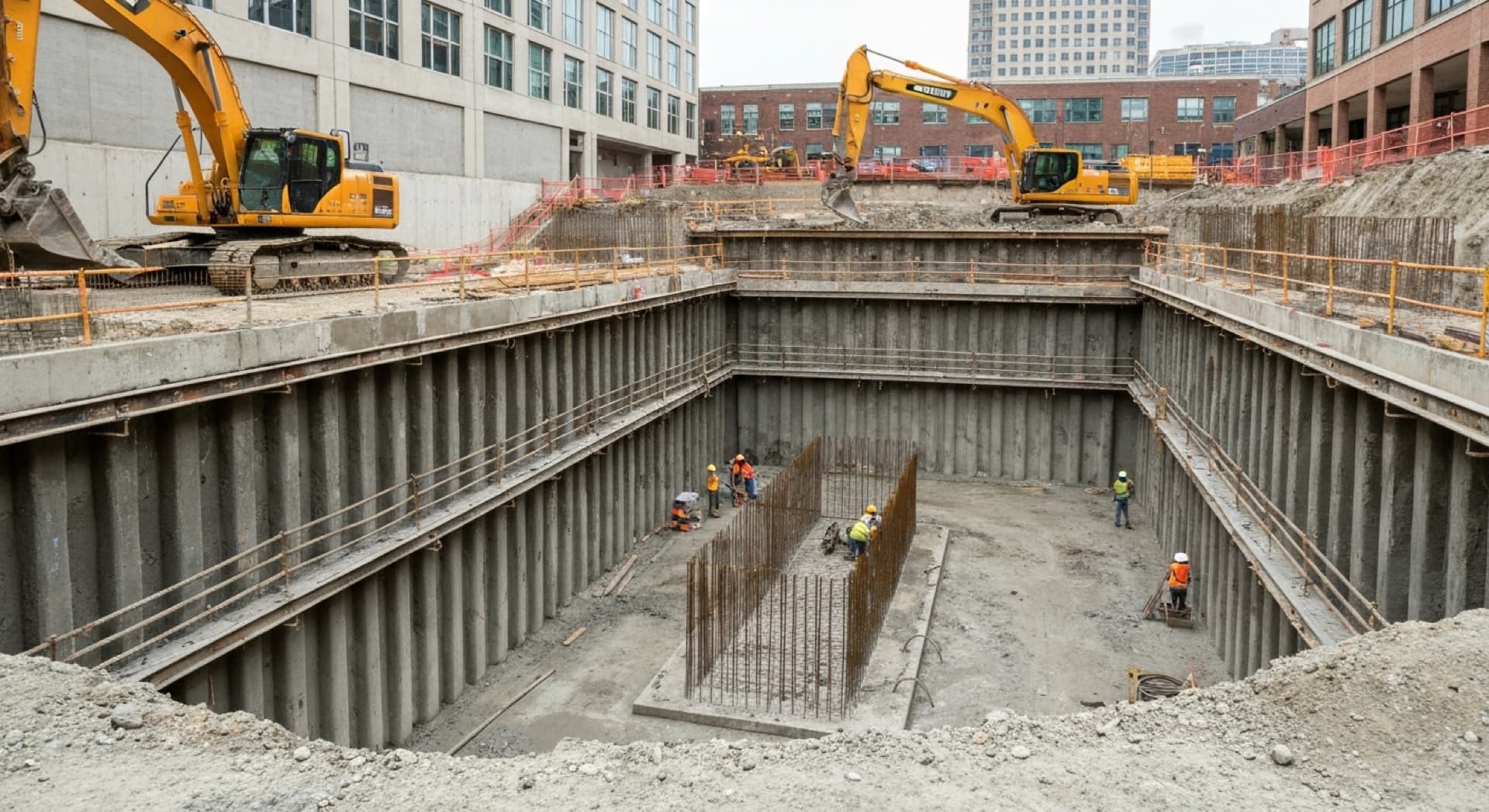
Designing Below Ground in Sydney
Basement structures are among the most complex elements we design at ACSES Engineers. Every basement project is unique because it depends entirely on what is beneath the surface, and in Sydney, that varies enormously from site to site.
Understanding the Ground
Before any design work begins, we need a comprehensive geotechnical investigation. Boreholes are drilled, samples taken, and laboratory tests conducted to determine soil and rock classifications, bearing capacity, groundwater levels, and excavation characteristics.
Sydney's geology ranges from deep alluvial clays in the western suburbs to sandstone and shale formations closer to the harbour. Each presents different challenges. Clay soils swell when wet and shrink when dry, creating lateral pressures on basement walls that must be carefully accounted for. Rock excavation requires assessment of rock strength, jointing patterns, and the feasibility of different excavation methods.
Shoring Design
In urban Sydney, basement excavations are typically adjacent to existing buildings, roads, and services. The excavation faces must be supported to prevent collapse and protect neighbouring structures.
At ACSES Engineers, we use finite element modelling to design shoring systems tailored to each site. Common solutions include contiguous pile walls with shotcrete infills, sheet pile walls, and soldier pile and lagging systems. The choice depends on ground conditions, excavation depth, neighbouring structures, and cost.
Our FEM analysis allows us to optimise shoring designs by taking full advantage of the ground's inherent strength. In many cases, we can significantly reduce the extent of shoring required, resulting in substantial cost and time savings for our clients.
Foundation Design
Basement foundations must transfer the entire building's weight to the ground while resisting hydrostatic uplift from groundwater. In areas with high water tables, the foundation system must include waterproofing membranes, tanking systems, and sometimes pressure relief valves.
Raft foundations, pad footings, strip footings, and piled foundations are all used depending on soil conditions and building loads. Our approach is always to select the most efficient and cost-effective solution that meets all safety and serviceability requirements.
Structural Design
Basement walls, slabs, and columns must resist soil pressures, water pressures, building loads, and sometimes traffic loads from adjacent roads. The interaction between these loads requires careful analysis.
We design basement slabs as either conventionally reinforced or post-tensioned solutions depending on span requirements and crack control needs. Waterproofing is critical, and our designs incorporate appropriate construction joint details, waterstops, and membrane systems.
The ACSES Approach
What sets our basement design apart is our holistic approach. We do not design the shoring, foundations, and superstructure in isolation. We consider how each element interacts with the others and with the ground conditions to develop integrated solutions that minimise cost, construction time, and risk.
We have designed basement solutions extending four or more levels deep in some of Sydney's most constrained urban sites. Each project reinforces our understanding of Sydney's ground conditions and construction methodologies.

Related Articles
Tell us about your project.
We will respond with a clear understanding of how we can assist.
Partner With Us