Five Famous Bridges, and What Engineers Learn From Each
Five Famous Bridges, and What Engineers Learn From Each
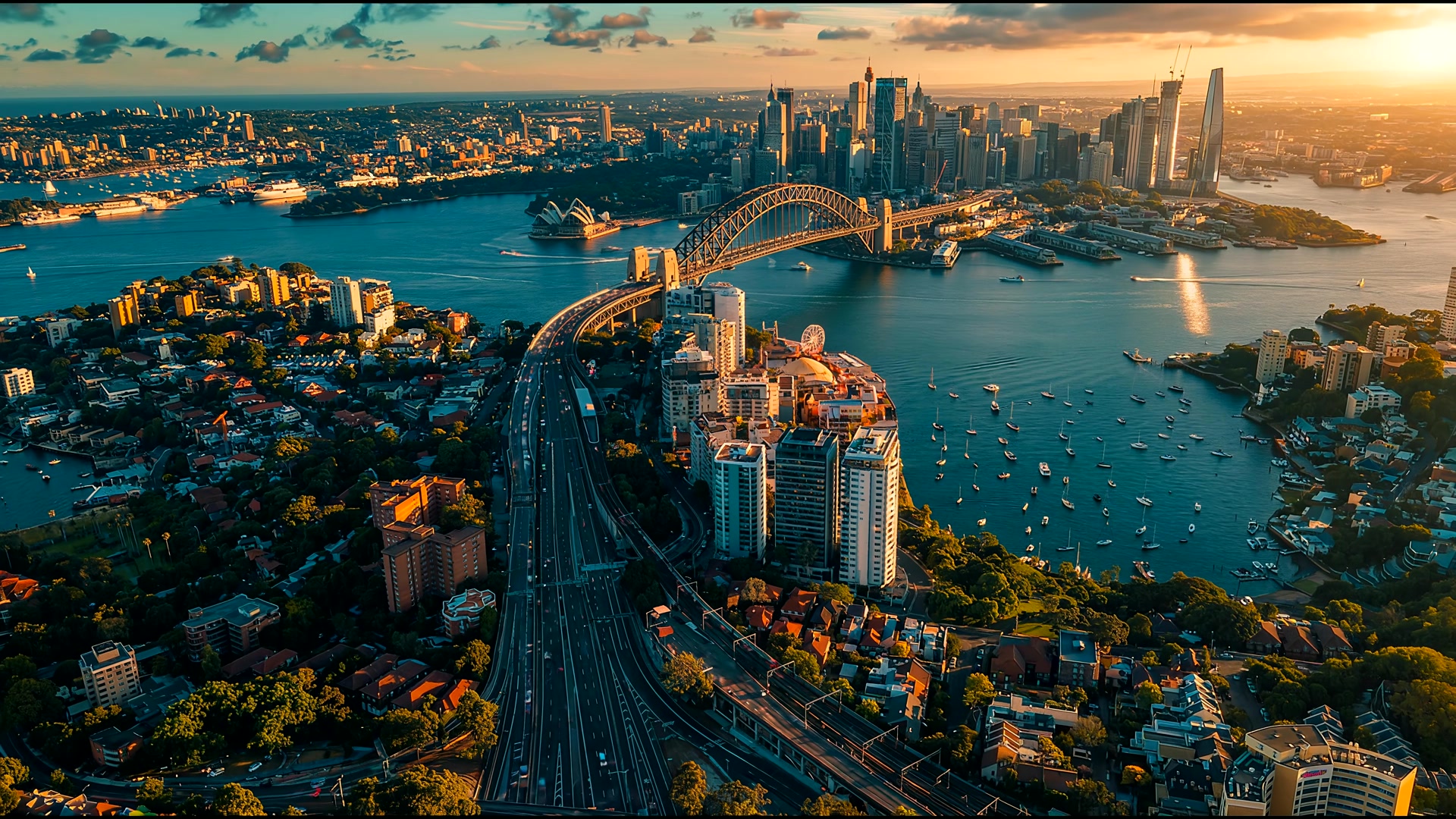
I remember standing under the southern pylon of the Sydney Harbour Bridge as a young engineer, looking straight up the steel into the underside of the arch. You can read every textbook ever written on arch action and it does not prepare you for what that geometry does to a person standing under it. The way the steel chords resolve a 504 metre span into the rock the pylons sit on. The way every rivet you can see is doing a job the next rivet beside it depends on. It taught me something I have carried for almost three decades, that a famous bridge is never famous for the photograph. It is famous because, somewhere in the engineering, a problem got solved for the first time, and every engineer working after that solution inherits it.
The world's most famous bridges are teachers. I tell young engineers in our office to look at them not as monuments but as case studies. Every iconic bridge in this list is a structural answer to a question that nobody had answered cleanly before, and the answer is still earning its keep today, on jobs that look nothing like the original. What follows is five of them, picked for the diversity of the structural systems involved, with the lesson each one still teaches in the way we approach structural engineering today.
Sydney Harbour Bridge, 1932
The Sydney Harbour Bridge is a steel through-arch with a span of 504 metres, opened on 19 March 1932 after eight years of construction. The arch carries 39,000 tonnes of steelwork on its own, and the bridge as a whole holds roughly 52,800 tonnes of steel above the harbour, riveted together with about six million hand-driven rivets. At completion it was the world's widest long-span bridge, and the arch summit sits 134 metres above sea level. The design choice that matters here is the two-pinned arch. Each end of the arch sits on a pin in the masonry pylon, free to rotate, which means the bridge can move with temperature and load without trying to crack itself apart. The structure resolves its loads through the geometry, not through bulk.
The lesson for the engineer is buildability under thrust. A two-pinned arch lives or dies on what it pushes against. If the rock at the abutments is not what you thought it was, your arch is not what you thought it was. Almost a century later, the same principle still runs through every retaining wall, every basement raft, every deep foundation we design in Sydney sandstone. The ground always has the last word. The Harbour Bridge stands because the engineers behind it took that question seriously before they let a single piece of steel arrive on site.
Golden Gate Bridge, 1937
The Golden Gate Bridge is a suspension bridge with a main span of 1,280 metres, opened on 27 May 1937 across the entrance to San Francisco Bay. Two main cables, each 92.4 centimetres in diameter and built from 27,572 strands of steel wire, carry the deck loads up to towers that rise 227 metres above the water. The roadway sits 81 metres above the mean high water mark at midspan. At opening it was the tallest and longest suspension bridge in the world, and it held the longest main span for 27 years.
What it teaches is wind. The Golden Gate sits across one of the windiest crossings in North America, and the deck was designed slender, which made it long, slender and very flexible. That worked out across the strait. Three years later, on a different bridge across a different strait, slenderness without aerodynamic stability produced the Tacoma Narrows failure, and the entire suspension-bridge profession reset around it. Every long-span deck since has been designed with aerodynamic behaviour pulled forward into the concept. The Golden Gate teaches engineers that the elegant solution is the right solution only if it survives the load case nobody on the team is thinking about yet. We design for the event everyone hopes never happens.
Forth Bridge, Scotland, 1890
The Forth Bridge is a cantilever railway truss across the Firth of Forth in Scotland, opened in 1890 to designs by Sir John Fowler and Sir Benjamin Baker. Two main spans of 521 metres, three cantilever towers each 110 metres tall, all sitting on granite piers, the whole superstructure weighing roughly 51,000 tonnes and built with 6.5 million rivets. At completion it was the longest bridge in the world, and it stayed that way until the Quebec Bridge superseded it almost two decades later. It is one of a small handful of structures in this list to have been built before reinforced concrete was a standard tool, and you can see it in the brief. Every load path is a steel member you can point at.
The Forth's lesson is the discipline of explicit load paths. A cantilever truss is the most legible structural system of any major bridge type ever built. You can stand under it and trace exactly how the train load gets back to the granite. Baker famously demonstrated the principle with two men sitting on chairs holding sticks supporting a third man in the middle, the cantilever in human form. That clarity is a discipline we still teach. When we sit with a developer's architect at concept stage on a 21-storey tower, the question we are answering is the same one Baker was answering across a Scottish estuary. Where does the load go, and is every element honest about its part of the journey. The cantilever truss is the structural system that admits no hidden hand. Either the geometry works or it does not.
Millau Viaduct, France, 2004
The Millau Viaduct opened on 14 December 2004, carrying four lanes of the A75 motorway across the Tarn gorge in southern France. It is a cable-stayed multi-span bridge, 2,460 metres long, with seven steel towers rising 87 metres above the road deck. Its structural height of 336.4 metres makes it the tallest bridge in the world by that measure. The structure is supported by 154 stay cables fanning down to the deck. It was designed by Michel Virlogeux with Norman Foster, and it was built in roughly three years, which for a structure of this scale is moving quickly.
The Millau teaches integration. The bridge is a piece of civil engineering and structural engineering and aerodynamic engineering and constructability planning that was solved as one problem, not five problems handed between five firms. The deck was launched out from the pylons in segments and met in the middle, which means the construction sequence had to be embedded in the structural design from day one. There is no version of this bridge where the structural engineer hands a finished design to a builder and walks away. The structure and the method are the same drawing. That is the way we run project management on every multi-discipline development we deliver. Structural, civil and geotechnical in the same office, working the same problem, because the only bridge in the world taller than this one was built by a team that operated the same way.
Akashi Kaikyō Bridge, Japan, 1998
The Akashi Kaikyō Bridge crosses the Akashi Strait between Kobe and Awaji Island, opened on 5 April 1998. It is a three-span suspension bridge with a central span of 1,991 metres, which held the world record for longest suspension span for 24 years and remains the second-longest today. The two main towers rise 282.8 metres above sea level. The bridge is designed to withstand winds of 286 kilometres per hour, earthquakes up to magnitude 8.5, and a strait that runs some of the strongest tidal currents in the Inland Sea. The towers carry tuned mass dampers to control vibration in those wind and seismic events.
The lesson here is the most expensive lesson on the list. The central span was originally designed at 1,990 metres. On 17 January 1995, while construction was still under way, the Kobe earthquake struck with its epicentre directly between the two unfinished towers. The towers moved roughly a metre apart. The deck had not yet been built, so the engineers absorbed the new geometry into the design and the final span came in at 1,991 metres. The bridge stands today because the design margin was not a margin on paper. The structural system, the foundations, the towers, the cable strategy, all of it was conceived with seismic and wind action treated as a real load case, not a compliance check. Every engineer should sit with that for a moment. The earth moved during construction. The bridge still stands. That is what design for the extreme event actually looks like when it is taken seriously from the first sketch.
What These Bridges Have in Common
Five different structural systems, three centuries between the oldest and the newest, and one shared discipline. Every bridge in this list was built by engineers who treated the geometry, the ground and the worst-case load as the same problem. The Forth treats its load path as visible and honest. The Harbour Bridge resolves a 504 metre arch through the rock at its feet. The Golden Gate was designed for an aerodynamic event the profession was only just beginning to understand. Akashi Kaikyō absorbed an earthquake mid-build and stood up anyway. Millau was conceived as structure and construction method in the same set of drawings. Take any one of those bridges apart and you find the same posture underneath, which is that engineering excellence is not a style and it is not a brand. It is the willingness to do the analysis before the geometry is committed.
The other thing all of them share is buildability. None of these bridges were academic objects. They were built by real crews, with real formwork, real cranes, real ironworkers, in real weather. The drawings made sense to the people putting them together. That is the bar a famous bridge clears that a forgettable one does not. The engineering is right on paper AND on site. If you want to read more on the structures that earn that label, our piece on our piece on remarkable bridges picks up from a different angle.
The Engineering Is the Story
I come back to that moment under the Sydney Harbour Bridge often. Not because it is the largest or the longest or the most technically ambitious bridge on the planet, none of which it is, but because it sits in the city I have practised in for almost three decades and because it never stopped being a teacher. Every time I drive across it I think about the abutments. Every time I walk under it I think about the rivets. The famous bridges of the world are not famous because somebody decided they should be. They are famous because the engineering inside them quietly does its job, in wind, in heat, in earthquakes, under traffic, century after century, and the people who designed them are mostly long gone.
That is why I am still in this profession. We do not design for the ribbon-cutting. We design for the hundred years after it. The work speaks for itself, and it has for decades. The brief is the same on a Sydney basement as it is on a 1,991 metre suspension span. Get the loads right. Get the ground right. Get the geometry right. And get it right on paper AND on site.
Building Relationships Beyond Structures

Related Articles
Tell us about your project.
We will respond with a clear understanding of how we can assist.
Partner With Us