
Finite Element Modelling in Structural Design: Principles and Practice
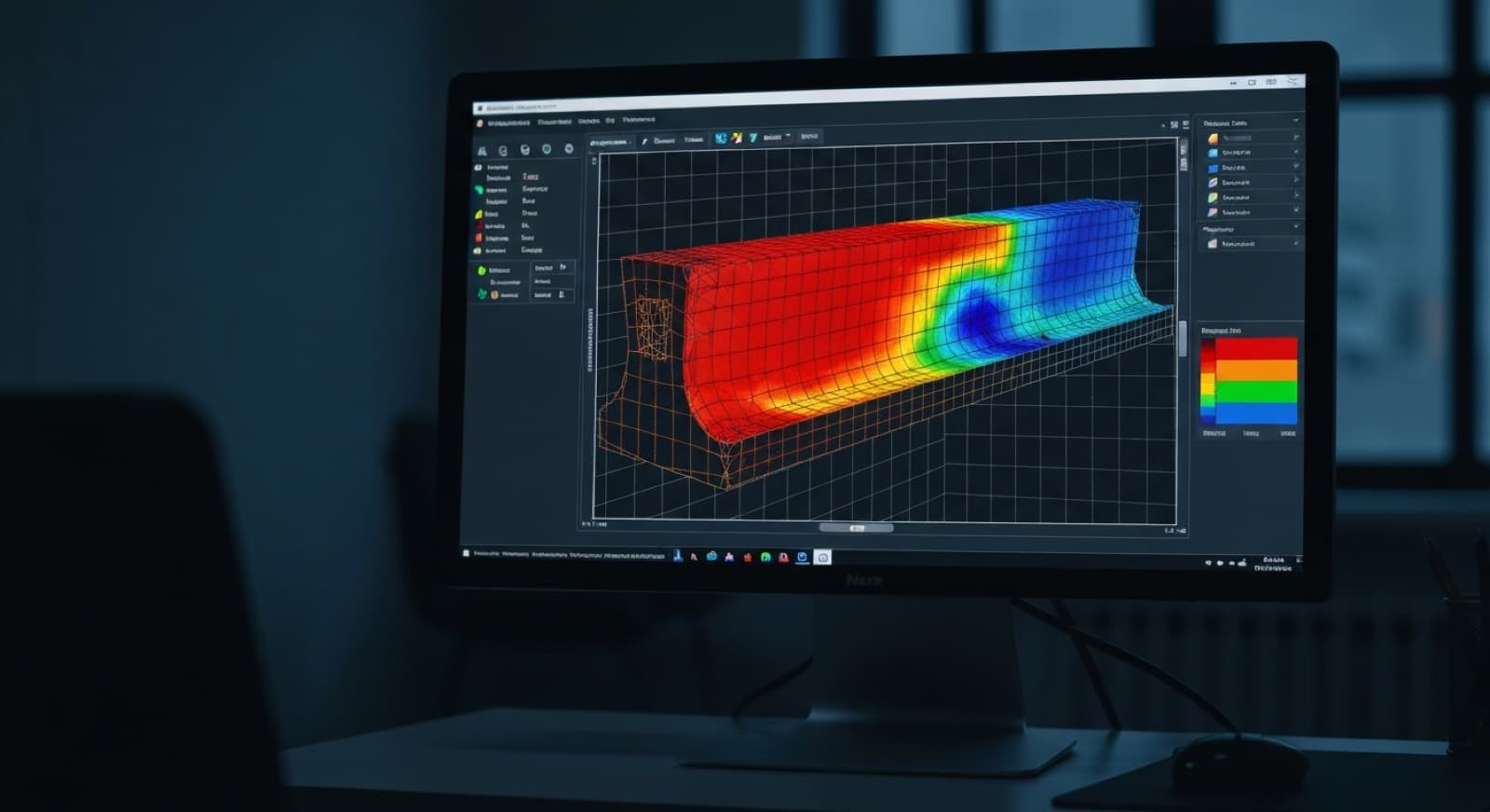
Finite Element Modelling in Structural Design
Finite element modelling (FEM) is one of the most powerful tools available to modern structural engineers. It allows us to analyse complex structural behaviour that cannot be captured by simplified hand calculations, and to optimise designs for efficiency and economy.
What Is FEM?
The finite element method divides a structure into a large number of small elements, each with known mechanical properties. By solving the equations of equilibrium for all elements simultaneously, FEM can determine the stresses, strains, and deformations throughout the entire structure.
Applications in Structural Engineering
FEM is used for analysis of complex structural geometries, evaluation of stress concentrations around openings and connections, dynamic analysis of structures subject to wind and seismic loads, non-linear analysis of structures at ultimate capacity, and optimisation of material distribution within structural elements.
Common Pitfalls
The power of FEM comes with responsibility. Common pitfalls include relying on default settings without understanding their implications, using inappropriately coarse or fine meshes, applying incorrect boundary conditions, and accepting results without engineering judgement verification.
Our Approach
At ACSES Engineers, we use FEM as a tool to enhance engineering judgement, not replace it. Every FEM analysis is verified against simplified calculations and engineering intuition. If the computer output does not match our expectation, we investigate until we understand why - rather than simply accepting the numbers.

Related Articles

Tell us about your project.
We will respond with a clear understanding of how we can assist.
Partner With Us