
Cross-Laminated Timber: A Viable Alternative to Concrete and Steel?
The Rise of Engineered Timber
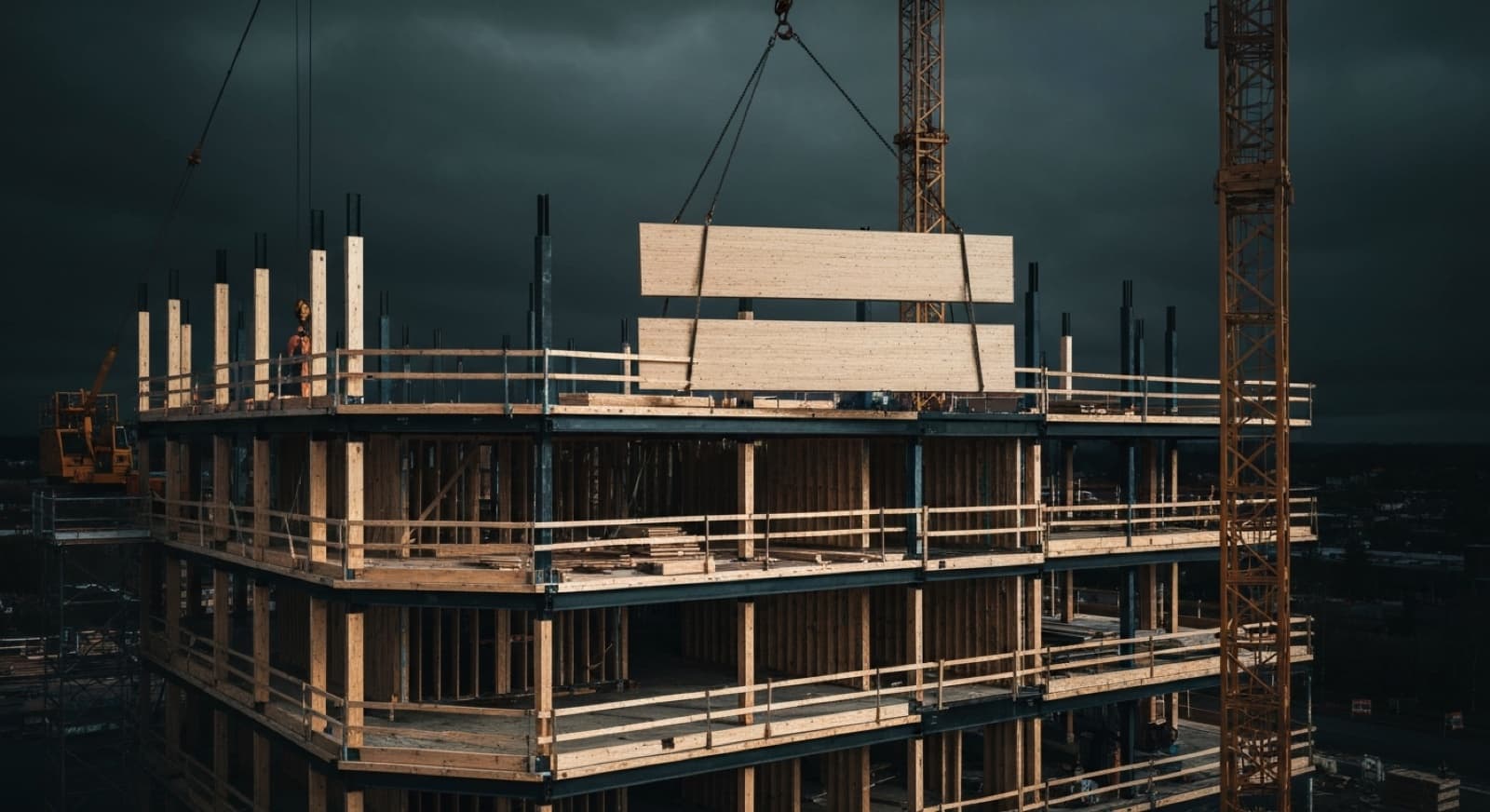
Cross-laminated timber is arguably the first major structural innovation since the advent of reinforced concrete over 150 years ago. Made from layers of timber boards glued together at right angles, CLT panels exhibit structural properties that allow them to function as walls, floors, and roofs in multi-storey buildings.
How CLT Works
CLT panels are manufactured by layering boards in alternating directions and bonding them under pressure. This cross-lamination gives the panels strength and stiffness in both directions, similar to plywood but at a much larger scale. Standard panels can be up to 3 metres wide, 16 metres long, and 500 millimetres thick.
The manufacturing process is highly controlled, resulting in precise dimensional accuracy and consistent material properties. Panels arrive on site pre-cut with openings for windows, doors, and services already formed.
Structural Performance
CLT has excellent strength-to-weight ratio. A CLT building weighs approximately one-fifth of an equivalent concrete building. This dramatically reduces foundation loads, which can be a significant advantage on sites with poor ground conditions.
The material performs well in fire despite being combustible. Thick CLT panels char on the outside, with the char layer insulating the inner timber and maintaining structural capacity. Fire engineering design for CLT buildings is well established in Australia and internationally.
Seismic performance is another advantage. The lightweight and ductile nature of CLT structures makes them inherently resilient to earthquake loading.
Sustainability Credentials
Timber is the only major structural material that is renewable. Trees absorb carbon dioxide as they grow, and that carbon remains stored in the timber throughout the building's life. A well-managed forestry supply chain makes CLT a genuinely sustainable structural material.
Manufacturing CLT requires significantly less energy than producing steel or cement. And at end of life, timber can be recycled, reused, or used as biomass fuel.
Australian Applications
Several mid-rise CLT buildings have been completed in Australia, demonstrating the material's viability in our market. The material is covered by the National Construction Code, and structural design guidance is available through Australian Standards.
However, CLT is not yet cost-competitive with concrete for standard residential buildings in the current market. Supply chain development, designer familiarity, and builder experience all need to grow before CLT can compete at scale.
Our Assessment
CLT is a genuine structural material with real advantages in specific applications. Lightweight structures on constrained sites, rapid construction programmes, and projects with strong sustainability requirements are all good candidates.
We expect CLT to play an increasingly important role in Australian construction over the coming decade, particularly as carbon reduction pressures increase and the local supply chain matures. Engineers who develop expertise in timber design now will be well positioned for this transition.

Related Articles
Tell us about your project.
We will respond with a clear understanding of how we can assist.
Partner With Us