
Stormwater Management for Urban Developments in Sydney
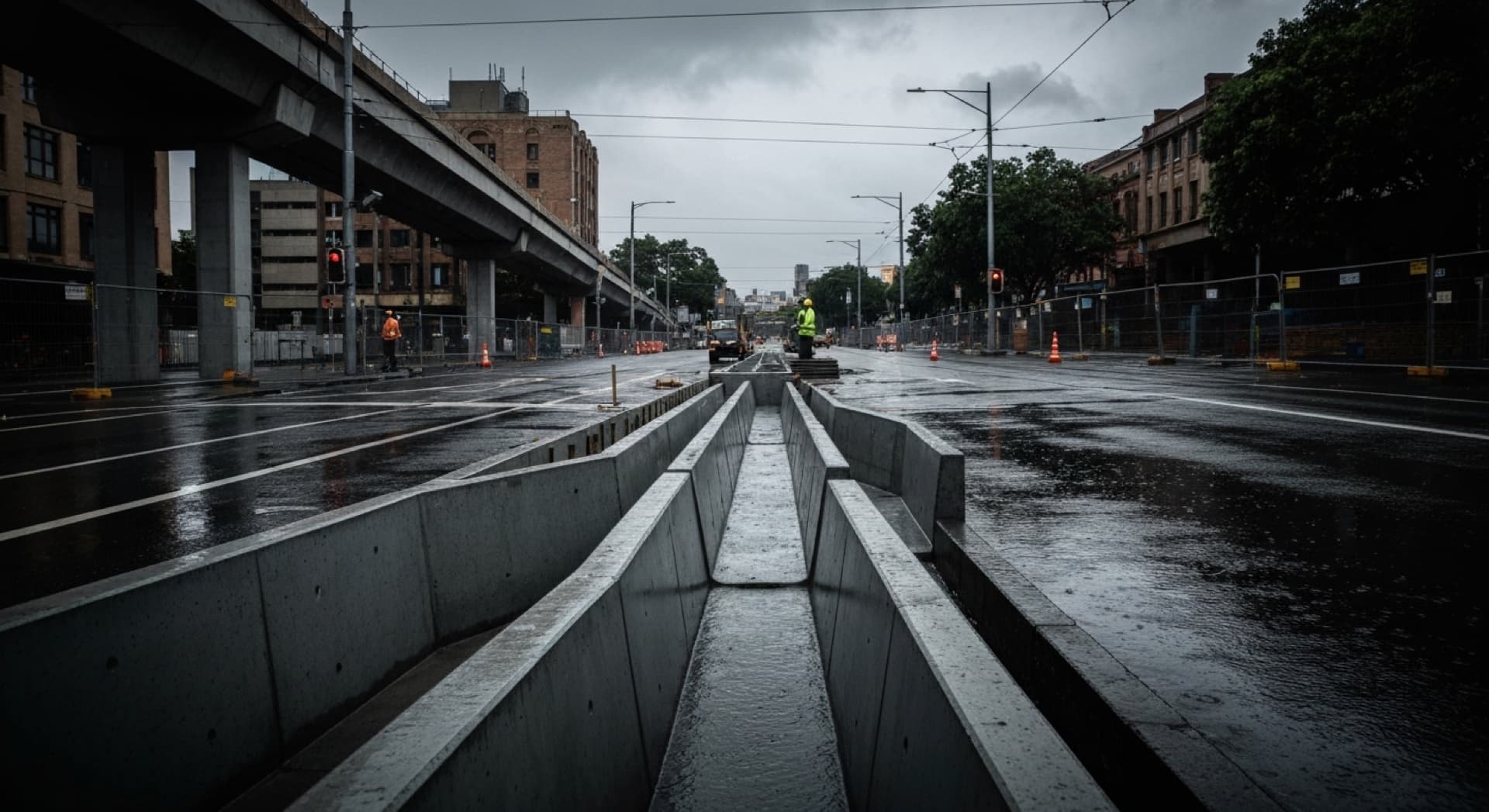
Stormwater Management for Urban Developments
Every building site produces stormwater runoff. When it rains on a developed site, the water runs off roofs, roads, and paved areas faster and in greater quantities than it did from the natural ground. Managing that runoff is a civil engineering requirement on every development in Sydney.
Why It Matters
Uncontrolled stormwater runoff from a development site can cause:
- Flooding of downstream properties and infrastructure
- Erosion of watercourses and drainage channels
- Pollution of receiving waterways from sediment and contaminants
- Damage to roads, footpaths, and other public infrastructure
Council development consent conditions always include stormwater management requirements, and failing to comply can delay your occupation certificate.
On-Site Detention (OSD)
Most councils in Sydney require on-site detention (OSD) for new developments. The principle is straightforward: the development must not increase the peak stormwater flow rate leaving the site compared to the pre-development condition.
An OSD system temporarily stores the excess runoff in a tank or basin and releases it at a controlled rate. The system includes:
- Storage volume sized to detain the difference between the post-development and pre-development peak flows
- Outlet control that restricts the discharge to the permitted flow rate
- Overflow provision for events that exceed the design capacity
- Maintenance access so the system can be cleaned and inspected
The OSD tank is typically located in the basement or under the ground floor slab of the building. This means the structural engineer needs to coordinate with the civil engineer to accommodate the tank within the structural design.
Water Sensitive Urban Design (WSUD)
Many councils in Sydney now require WSUD measures in addition to OSD. WSUD aims to manage stormwater quality as well as quantity. Common WSUD measures include:
- Rainwater tanks for reuse of roof water (toilet flushing, irrigation, laundry)
- Bioretention systems (rain gardens) that filter stormwater through vegetated soil media
- Permeable pavements that allow stormwater to infiltrate into the ground
- Gross pollutant traps that capture litter and debris before they enter the drainage system
The civil engineer designs these systems to comply with council requirements, typically using modelling software such as MUSIC (Model for Urban Stormwater Improvement Conceptualisation).
Council Requirements
Stormwater requirements vary between councils. Each council has its own development control plan (DCP) that specifies:
- OSD volume and discharge rate requirements
- WSUD targets (typically expressed as pollutant removal percentages)
- Stormwater connection requirements to the public drainage system
- Maintenance requirements for stormwater treatment devices
It is important to check the specific requirements of your council early in the design process. Requirements that are overlooked during design can be expensive to retrofit during construction.
Integration with Structural Design
The stormwater management system needs to work within the structural framework of the building. This requires coordination between the civil and structural engineers:
- OSD tanks in basements need structural slabs and walls that can contain the stored water
- Rainwater tanks add load to the structure when full
- Bioretention systems on podium levels need waterproof structural slabs and adequate soil depth
- Pipe routes need to be accommodated within the structural floor zones
At ACSES Engineers, our civil and structural teams work together from the start of the design process. This integrated approach ensures the stormwater system and the building structure are compatible and that no costly clashes arise during construction.
Practical Advice
- Check council requirements early and design to comply from the outset
- Coordinate the OSD location with the structural and services engineers
- Allow adequate space for stormwater treatment devices and maintenance access
- Consider rainwater reuse as both a WSUD measure and a cost saving for residents
- Engage your civil engineer at the same time as your structural engineer for coordinated design
Stormwater management is not the most glamorous aspect of development engineering, but it is essential. Getting it right avoids council delays, protects downstream properties, and contributes to better urban environments.

Related Articles
Tell us about your project.
We will respond with a clear understanding of how we can assist.
Partner With Us