
Stormwater Management for Sydney Sites — On-Site Detention, Infiltration, and Compliance
Stormwater Management for Sydney Sites — On-Site Detention, Infiltration, and Compliance
Stormwater is where Sydney Water, the council DCP, and the building footprint all meet — and rarely agree. The job of the civil engineer is to deliver compliance from all three without compromising the development.
The Three-Way Tension
Sydney Water's interest is in the public stormwater network. They don't want post-development flows exceeding pre-development flows, because that overloads downstream infrastructure they have to maintain.
The council's interest is in their DCP. Most Sydney councils require on-site detention (OSD) sized to absorb storms up to a certain Annual Exceedance Probability (typically 1% AEP for major systems). Many also encourage or mandate infiltration where geology allows.
The developer's interest is in maximising the building footprint and minimising civil cost. Every cubic metre of OSD tank takes basement or yard space. Every metre of infiltration trench costs civil dollars and reduces landscape area.
On-Site Detention — The Mechanics
OSD storage must accept stormwater from the site at the design rainfall intensity, hold it back, and release it at the controlled (pre-development equivalent) rate. The two design parameters are:
- Storage volume — calculated from the design storm hydrograph minus the allowable discharge hydrograph, accounting for catchment area and runoff coefficient
- Discharge rate — the maximum allowable release, set by council to match pre-development conditions or downstream system capacity
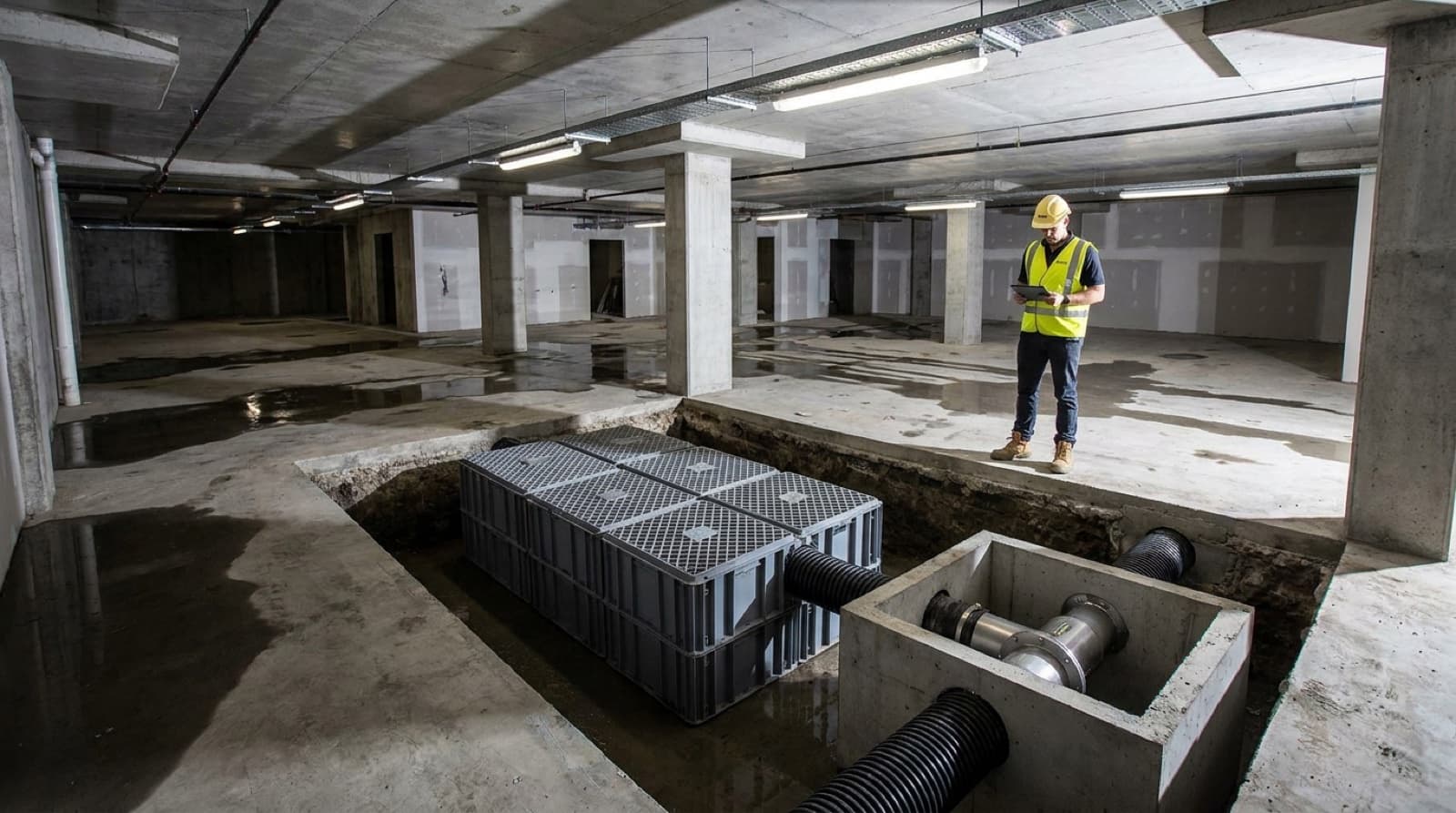
The physical form of OSD storage varies. We design above-ground rainwater tanks (rare in dense Sydney sites), below-slab modular storage (common for residential/commercial), basement-level tanks (where space allows), and in-ground crate systems (for larger civil-led projects). The form follows the architectural envelope, not the other way around.
Infiltration — When and Where
Infiltration drains stormwater into the surrounding soil rather than to the network. It reduces OSD volume requirements, eases load on Sydney Water's pipes, and contributes to BASIX water credits.
The catch: Sydney's geology is highly variable. Hawkesbury sandstone infiltrates well. Wianamatta shale infiltrates poorly. Most infill sites require a geotechnical permeability test (typically a Constant Head Permeameter test) before infiltration can be designed.
Where infiltration works, the engineering pathway is:
- Soakage trench, soakaway, or subsoil drain sized for the design storm
- Setbacks from buildings (typically 3m+) and property boundaries
- Design verification under saturated soil conditions
- Overflow path to OSD or street system in case of soil saturation
Where Sydney Water Pushes Back
The council DCP can require infiltration. Sydney Water often requires that NO stormwater enters the sewer system (a common, underestimated source of compliance failures — illicit cross-connections will be detected and rectified at developer cost).
Where the site has poor infiltration capacity AND a constrained network connection, you may need both OSD and a flow-restricting device (e.g. a vortex flow control). The integrated design avoids surprises at Section 73 stage.
What We Deliver
For ACSES civil packages, the stormwater design deliverable includes:
- Catchment plan and runoff calculations
- OSD sizing report with hydrograph analysis
- Tank design and structural integration with basement / slab
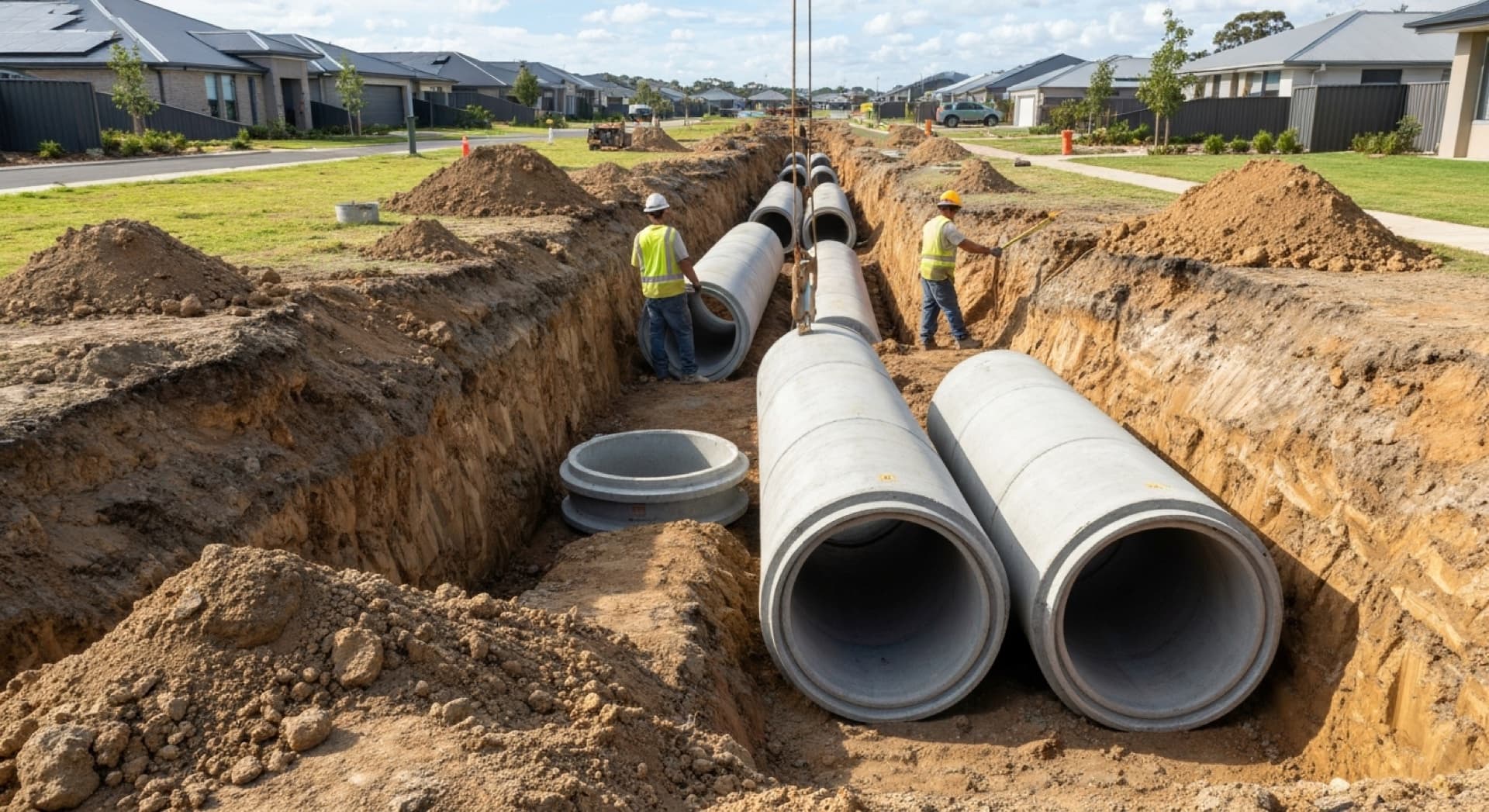
- Connection design from site to public network
- Compliance documentation for both council DCP and Sydney Water Section 73
- BASIX-compatible water credit calculations where applicable
We work the stormwater design into the structural and architectural model from the start, so the OSD volume isn't a last-minute spatial squeeze.

Related Articles
Tell us about your project.
We will respond with a clear understanding of how we can assist.
Partner With Us