
Steel Fabrication Tolerances And Site Fit
Structural steel is manufactured accurately. Concrete is not, and it is not meant to be.
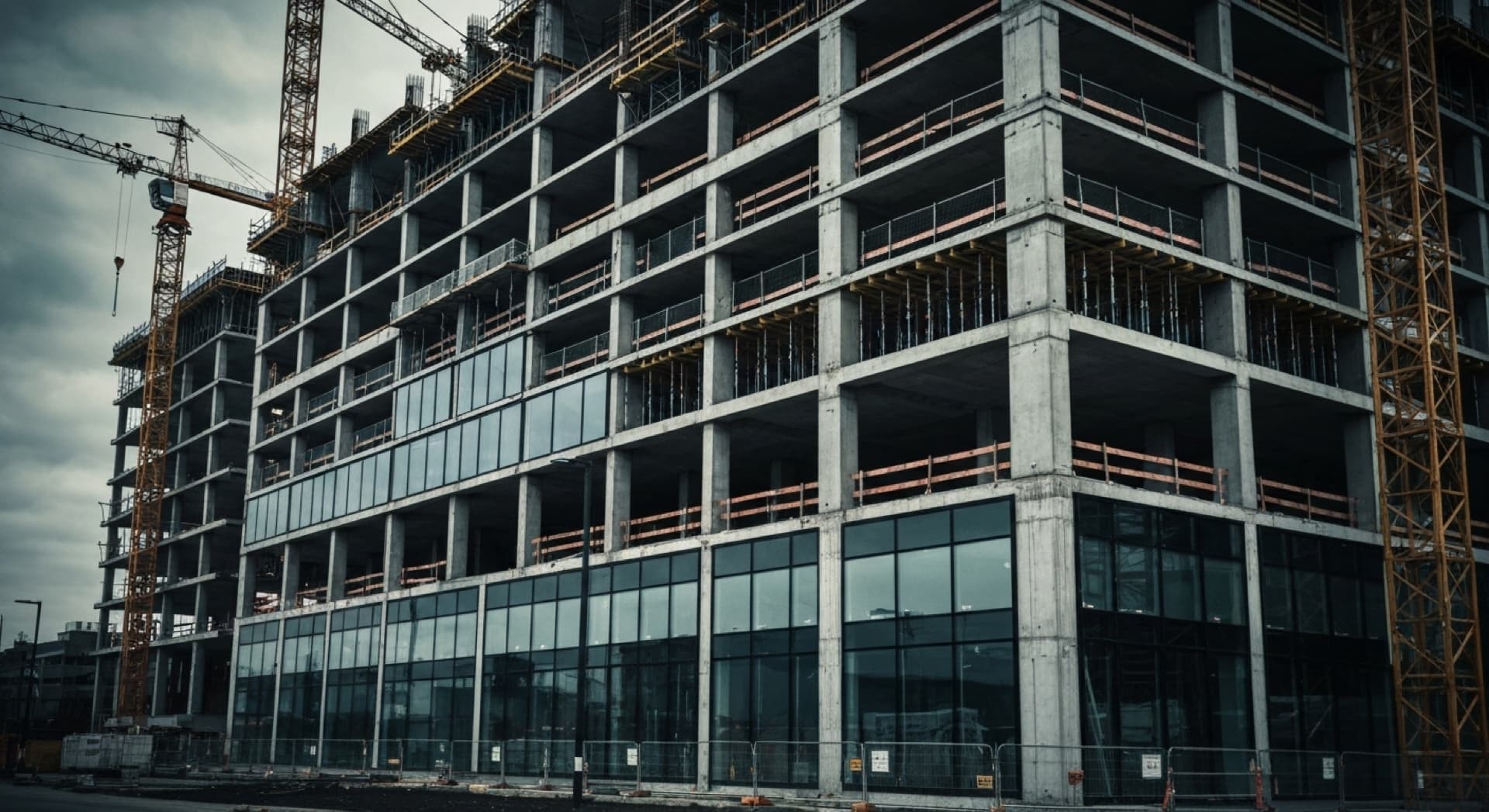
The fit problem on almost every steel job happens where the two meet.
Two different worlds
A fabricator works to millimetres. Holes are drilled from a numerically controlled machine, members are cut to length, and the finished piece matches the shop drawing closely.
A concrete structure is built to tolerances an order of magnitude coarser. A column can be out of position, out of plumb, and its face can be out of line, all within what the standard permits.
Neither party is doing anything wrong. The tolerances are simply different, and the connection has to absorb the difference.
Where it bites
Holding down bolts. Cast into concrete before the steel exists, and the single most common source of trouble. If the bolt group is out of position, the base plate does not fit.
The answer is to design for it: oversized holes in the base plate, a washer plate welded over the top, or bolts cast in adjustable sleeves. Designing a base plate with tight holes onto cast-in bolts is asking for a site problem.
Steel to concrete connections generally. A beam bearing onto a concrete wall, a bracket fixed to a column. Slotted holes, shims and a grout gap are what make these work.
Existing structures. Connecting new steel to an old building, where the actual positions are unknown until they are measured. Nothing should be fabricated before a survey. This is the recurring lesson of [assessing an existing building with no drawings](/blog/assessing-an-existing-building-with-no-drawings).
Long runs. Cumulative error across a series of connections. Each is within tolerance and the last one does not fit. Designing in a take-up point partway along a long run solves it.
The provisions that prevent it
Slotted and oversized holes at the interfaces, with the direction of the slot chosen to suit what needs to move.
Shim packs allowed for and detailed, rather than found on the day.
A grout gap under base plates, so level is set by the steel and the gap is filled afterwards rather than the steel being expected to land on a perfect surface.
Site welding where the tolerance genuinely cannot be resolved with bolts, accepting that it is slower and needs inspection.
Survey before fabrication of anything connecting to existing work or to cast-in items.
Shop drawings are where it gets caught
Shop drawings are produced by the fabricator from the engineer's design, and they carry every hole, weld and dimension that will actually be made.
Reviewing them is not a formality. It is the last point at which a connection problem costs a redraw instead of a site fix, and it is where an engineer checks that the connection being fabricated is the connection that was designed.
Turnaround matters as much as scrutiny. Steel fabrication has a lead time, and a shop drawing sitting unreviewed for three weeks is three weeks off the programme. The process is covered in [steel connection design and shop drawings](/blog/steel-connection-design-and-shop-drawings).
When it does not fit on site
The response matters more than the problem.
Nothing gets modified without the engineer. Holes get flame cut, plates get trimmed and members get forced into place, and every one of those changes the capacity of a connection that was designed for specific forces.
The correct sequence is to stop, measure what is actually there, and get a documented remedial detail. That is usually quick. A connection field-modified and covered is a defect nobody can see.
Getting it right earlier
The reliable prevention is a survey of the concrete before the steel is fabricated, and connection details designed with adjustment built in from the start.
Both are cheap at design stage. Neither is available once the truck arrives.
ACSES provides structural engineering and connection design for steel structures across Sydney. Talk to us about a project.

Related Articles
Tell us about your project.
We will respond with a clear understanding of how we can assist.
Partner With Us