
Why Engineering Drawings Must Be Buildable - Not Just Correct
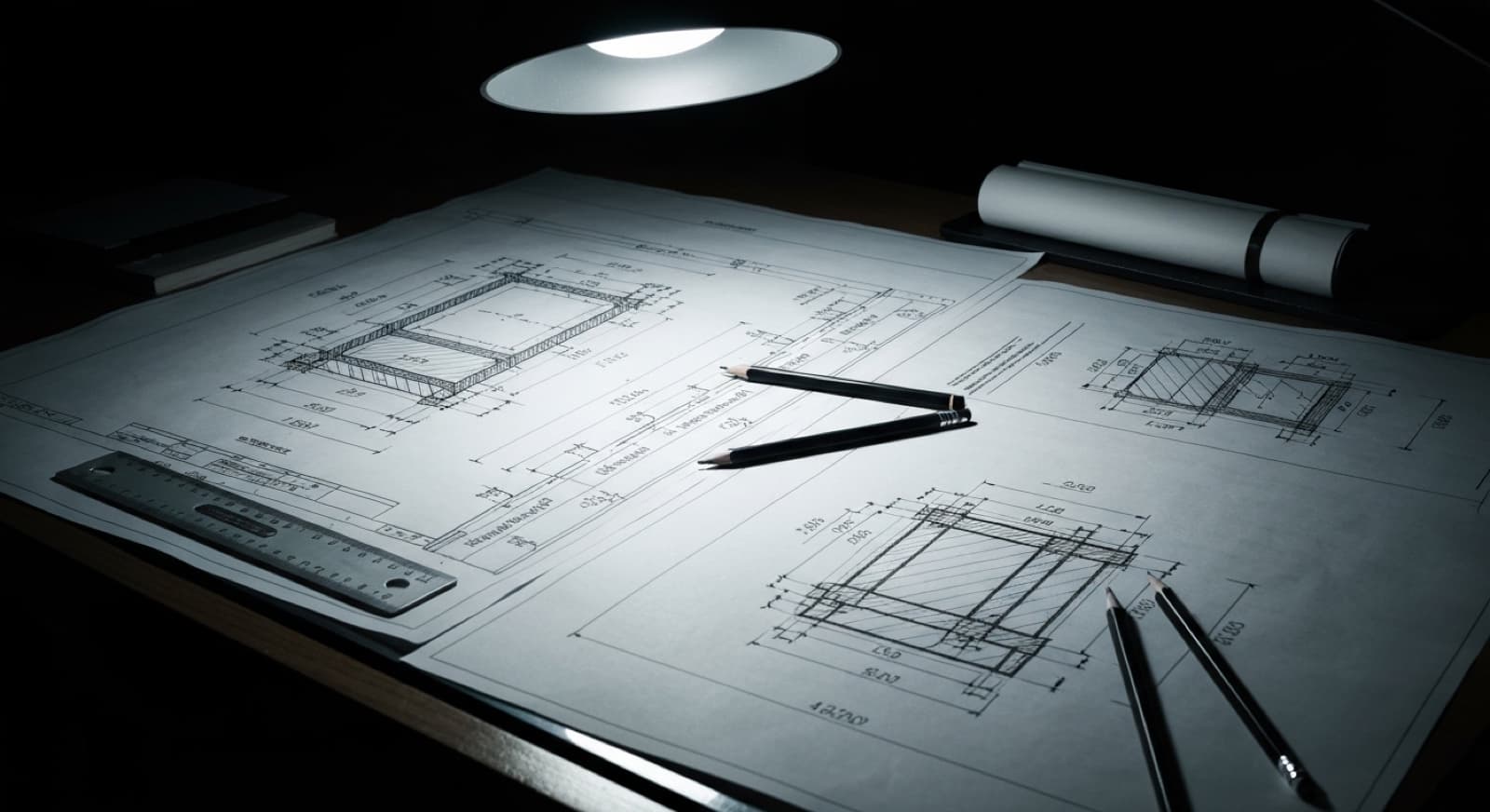
Correct Is Not Enough
I've reviewed thousands of structural drawings over my career. Some are brilliant. Some are technically correct but practically unbuildable. And believe me when I tell you, the second category causes far more problems than the first.
The Buildability Problem
A structural design can satisfy every code requirement, pass every peer review, and still create nightmares on site. Here's how:
- Congested reinforcement. When multiple beams frame into a column, the reinforcement from each beam needs to pass through the column. If the engineer hasn't coordinated these bars in three dimensions, you end up with a steel traffic jam that physically cannot be built as drawn.
- Impossible pour sequences. A design that requires simultaneous pouring of elements that can't practically be poured together forces the builder to construct in stages the engineer didn't anticipate.
- Unrealistic tolerances. Specifying a 100mm-thick wall with 40mm cover on each side leaves 20mm for the reinforcement. That's barely possible in a controlled factory, let alone on a construction site with typical placement tolerances.
What Buildable Design Looks Like
A buildable design considers:
- Reinforcement placement - Can the bars physically fit? Can the steel fixer reach them? Is there enough space for a vibrator to compact the concrete?
- Formwork - Can the formwork be erected and stripped efficiently? Are there re-entrant angles that trap formwork?
- Pour planning - Can the concrete be placed in a logical sequence? Where are the construction joints? Are cold joints properly detailed?
- Site constraints - Can the crane reach every element? Is there sufficient access for concrete trucks? Can materials be stored on site?
The Cost of Unbuildable Design
When a design can't be built as drawn, one of three things happens:
- The builder improvises - They modify the design on site without engineering input. This is dangerous and potentially non-compliant.
- RFIs and delays - The builder raises queries, the engineer redesigns, and the programme slips. Every day of delay on a multi-storey project costs thousands.
- Remedial work - The element is built incorrectly and needs to be demolished and rebuilt. I've seen this happen with transfer beams, and the cost is staggering.
Our Philosophy
At ACSES Engineers, buildability is not an afterthought - it's a design input. We consider construction methodology from the first conceptual sketch through to final detailing.
This comes from experience. When you've been on site, watched builders struggle with poorly detailed designs, and seen the cost consequences of unbuildable drawings, you develop a deep respect for practical engineering.
We don't design structures for a computer screen. We design them for a construction site, with real formwork, real steel fixers, and real concrete trucks.
George Khalil, Principal Engineer

Related Articles

Tell us about your project.
We will respond with a clear understanding of how we can assist.
Partner With Us