
The History of Concrete: From Ancient Rome to Modern Engineering
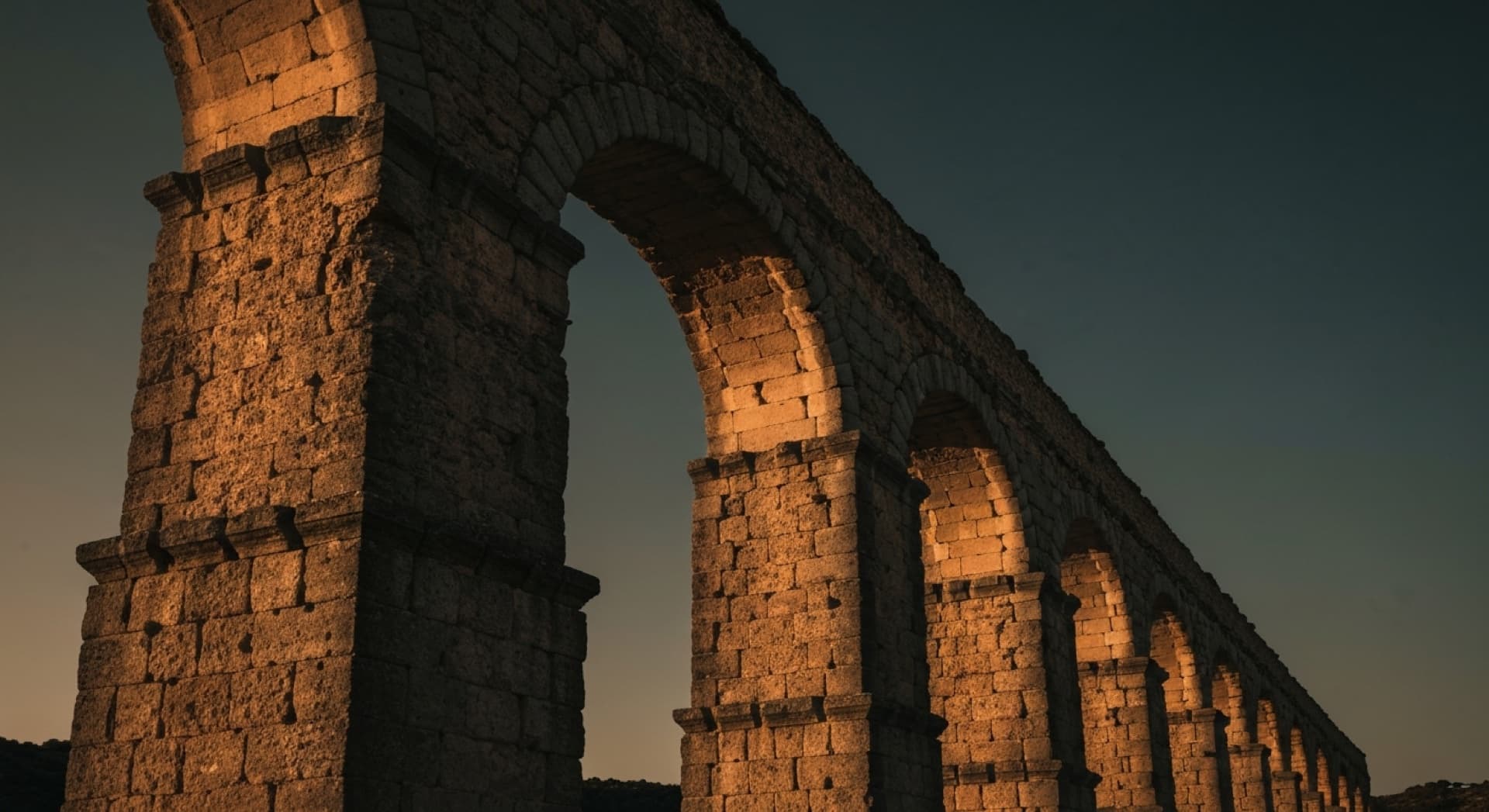
The Material That Built Civilisation
Concrete is so ubiquitous that we rarely stop to consider its remarkable history. Yet this single material has shaped human civilisation more profoundly than any other - from the Pantheon in Rome to the tallest skyscrapers in the world.
Ancient Origins
The earliest known use of concrete-like materials dates back to around 6500 BC, when Nabataean traders in the regions of southern Syria and northern Jordan used a form of concrete to build structures. However, it was the Romans who truly mastered the material.
Roman concrete, known as opus caementicium, was a mixture of volcanic ash (pozzolana), lime, and seawater. This combination created a remarkably durable material - so durable that Roman structures like the Pantheon, built nearly 2,000 years ago, still stand today.
What Made Roman Concrete So Durable?
Modern research has revealed that Roman concrete actually gets stronger over time. The seawater that was considered a weakness actually triggered a chemical reaction with the volcanic ash, creating aluminium tobermorite crystals that reinforced the concrete at a microstructural level.
This is a humbling discovery for modern engineers. Despite all our advances in materials science, the Romans stumbled upon a formula that, in some ways, outperforms what we produce today.
The Dark Ages and Rediscovery
After the fall of the Roman Empire, the knowledge of concrete production was largely lost for over a millennium. Construction reverted to stone and timber. It was not until the 18th century that engineers began rediscovering the potential of cementitious materials.
In 1756, British engineer John Smeaton developed a hydraulic lime concrete for the construction of the Eddystone Lighthouse. His work laid the groundwork for modern Portland cement, which was patented by Joseph Aspdin in 1824.
The Reinforced Concrete Revolution
The invention of reinforced concrete in the mid-19th century transformed construction forever. By embedding steel bars within concrete, engineers could exploit concrete's compressive strength and steel's tensile strength simultaneously.
Joseph Monier, a French gardener, is often credited with popularising reinforced concrete through his patented flower pots and tanks. But it was engineers like Francois Hennebique who developed the first practical reinforced concrete structural systems.
Pre-Stressed and Post-Tensioned Concrete
The 20th century brought further innovations. Eugene Freyssinet pioneered pre-stressed concrete in the 1920s and 1930s, introducing the concept of applying compressive forces to concrete before loading to counteract tensile stresses.
Post-tensioned concrete, a technique we use extensively at ACSES Engineers, allows for longer spans, thinner slabs, and more efficient structural designs. It has become the standard for multi-storey residential and commercial buildings across Sydney.
Modern High-Performance Concrete
Today, concrete technology continues to evolve. Ultra-high-performance concrete (UHPC) can achieve compressive strengths exceeding 150 MPa - compared to the 32-40 MPa typical of standard structural concrete.
Self-healing concrete, which uses bacteria to fill cracks automatically, is moving from laboratory research to real-world application. Carbon-capturing concrete, which absorbs CO2 during curing, addresses the industry's environmental footprint.
The Environmental Challenge
Concrete production accounts for approximately 8% of global CO2 emissions. The cement industry is under increasing pressure to decarbonise, and significant progress is being made through supplementary cementitious materials, carbon capture, and alternative binders.
At ACSES Engineers, we are committed to designing structures that minimise material usage without compromising safety. Efficient design is the first line of defence against unnecessary environmental impact.
Looking Forward
Concrete will remain the backbone of construction for the foreseeable future. No other material offers the same combination of versatility, durability, and cost-effectiveness. But the concrete of tomorrow will be smarter, greener, and more resilient than anything we have built with before.

Related Articles


Tell us about your project.
We will respond with a clear understanding of how we can assist.
Partner With Us